


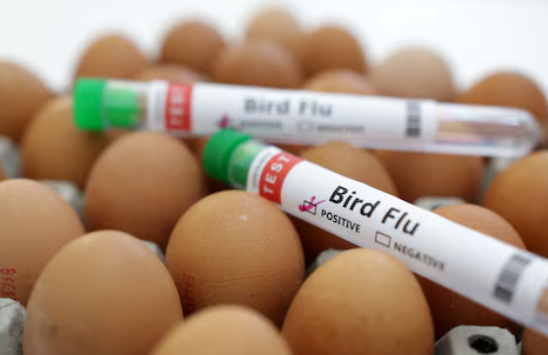
Test tubes labelled "Bird Flu" and eggs are seen in this picture illustration, January 14, 2023.
According to the Ministry of Agriculture, Nature and Food Quality, a transport ban has been imposed within a 10-kilometer radius of the affected farm. The restriction applies to 26 other poultry farms located in the designated zone. The ban covers the movement of poultry, eggs, and manure, as well as other materials that may carry the virus. These biosecurity measures are part of the government’s standard response protocol for controlling avian influenza outbreaks.
The ministry noted that the culling operation will be carried out under strict veterinary supervision to ensure animal welfare and limit the risk of infection spread. The authorities emphasized that the outbreak has been contained to the identified area, and ongoing monitoring is being conducted to assess the situation.
Last week, the Dutch Agriculture Ministry issued a nationwide directive requiring all poultry farms to keep their birds indoors to minimize contact with wild birds, which are considered a potential source of infection. The ministry also implemented a ban on bird exhibitions and gatherings across the country as a precautionary measure.
The Netherlands, one of Europe’s major poultry-producing countries, has experienced several bird flu cases in recent years. These outbreaks have led to periodic restrictions on poultry movement and trade within affected regions. The government continues to coordinate with local farmers and veterinary authorities to strengthen surveillance and preventive measures aimed at reducing the risk of future outbreaks.
Bird flu, or avian influenza, is a viral disease that primarily affects birds but can occasionally spread to other animals. While most strains pose low risk to humans, some variants can have significant economic impacts on the poultry industry due to the necessary culling and movement restrictions.
The Dutch authorities reiterated their commitment to maintaining high biosecurity standards and closely monitoring poultry farms nationwide. They stated that further updates will be provided as more information becomes available from ongoing testing and surveillance efforts.
With the latest measures, the government seeks to safeguard the poultry sector and ensure continued food supply stability while preventing the recurrence of large-scale outbreaks that could disrupt production and exports.
