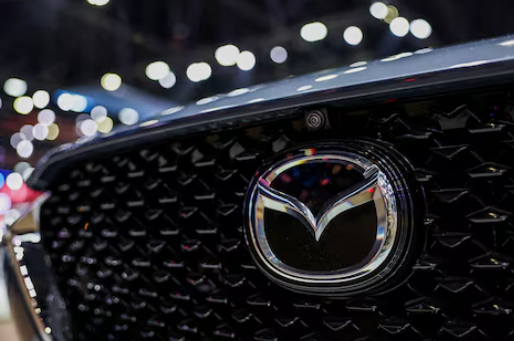
The Mazda logo is displayed at the 46th Bangkok International Motor Show in Bangkok, Thailand, March 24, 2025.
Numerous established vehicle manufacturers encounter possible European Union penalties due to a gradual transition to electric vehicles. Companies with limited electric vehicle sales can join emission pools with higher-performing entities, acquiring credits to reduce their collective averages.
The EU penalties, estimated by manufacturers to reach up to 15 billion euros ($17.5 billion) across the sector, originally targeted 2025 emission levels.
In March, the European Commission adjusted the rules following input from automakers, permitting compliance calculations based on average emissions from 2025 to 2027.
The collaboration between Mazda and the Changan joint venture applies for 2025. Additional manufacturers may join until November's end.
Mazda participates in another pool established early this year, centered on Tesla (TSLA.O) and encompassing Stellantis (STLAM.MI) and Ford (F.N).
With the addition of the Mazda-Changan arrangement, five emission pools have formed during the current year.
Pooling mechanisms enable flexible adherence to regulatory requirements. By sharing credits, participants balance fleet-wide emission figures without immediate full electrification.
The extended compliance period from 2025-2027 provides manufacturers extra time to align production with standards. This phased approach supports ongoing investments in alternative powertrains.
Mazda's dual pool involvement demonstrates strategic use of available options. The Tesla-led group offers access to surplus credits from a leader in electric vehicles.
The Changan joint venture pool focuses on Mazda's operations in a key market. Combining resources within the partnership optimizes credit utilization.
Open enrollment until November allows dynamic adjustments as sales data emerges. Manufacturers monitor progress and seek alignments to minimize financial exposure.
EU regulations drive innovation in low-emission technologies. Pools serve as transitional tools while companies scale electric vehicle output.
Industry-wide estimates highlight the scale of potential obligations. Collaborative structures distribute the burden and encourage knowledge sharing.
As pools multiply, the system reveals varied strategies among automakers. Some lead with high electric vehicle volumes, generating excess credits for sale.
Others, like Mazda, leverage multiple affiliations to cover diverse product lines and regional operations.
The document underscores proactive measures ahead of stricter future targets. Compliance frameworks evolve to balance environmental goals with manufacturing realities.
Ongoing pool formations indicate active engagement with the regulatory environment. Manufacturers adapt portfolios to include more zero-emission models over time.
This credit-sharing model facilitates smoother progression toward sustainable mobility. It maintains competitive viability during the shift from internal combustion engines.
Mazda's arrangements position it to manage emission averages effectively. Joint efforts with partners enhance overall efficiency in meeting requirements.
The EU's flexible pooling rules reflect responsiveness to sector challenges. They promote collective achievement of reduction objectives without abrupt disruptions.
As the November deadline approaches, further consolidations may occur. The landscape of pools will shape how credits flow among participants.
Ultimately, these mechanisms support the broader transition to cleaner transportation. They provide breathing room for technological and market developments.