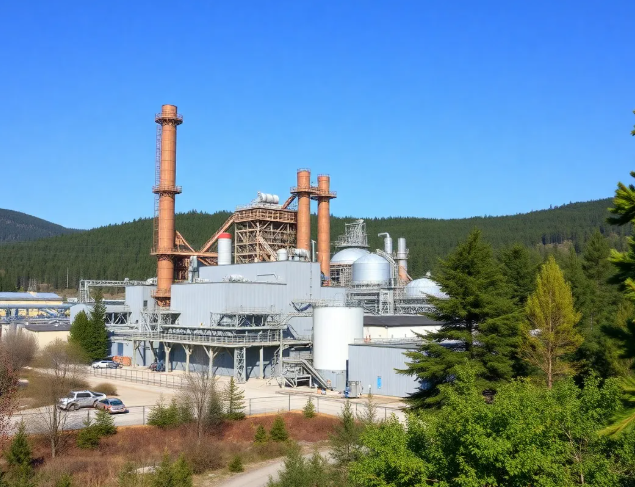
The project is designed to produce high-purity Dysprosium (Dy), Terbium (Tb), and other HREEs and light rare earths (LREEs), critical for advanced technologies including electric vehicles, wind turbines, drones, and robotics. Upon full production, Aclara expects to supply over 75% of U.S. DyTb demand for electric vehicles by 2028. Annual output is projected at 200 tons of Dy, 30 tons of Tb, and 1,400 tons of NdPr oxides, representing roughly 14% of China’s official DyTb production. The State of Louisiana supports the project with approximately US$46.4 million in tax incentives and grants.
This initiative is a key step in Aclara’s mine-to-magnet strategy, establishing a vertically integrated supply chain from its Brazilian and Chilean ionic clay deposits to the HREE separation facility in Louisiana. The separated HREEs will supply alloys to VAC (VACUUMSCHMELZE), which is constructing a permanent magnet production facility in Sumter, South Carolina.
Aclara plans to invest about US$277 million to develop the project on an 82-acre Louisiana Economic Development (LED) certified site at the Port of Vinton. The site offers road and waterway access via the Gulf Intracoastal Waterway and is near chlor-alkali facilities. Its LED certification allows immediate industrial development and fast-track construction. The company also plans an additional metals and alloys plant to support the permanent magnet industry. The separation technology is designed to be scalable, allowing potential expansion to process material from other ionic clay deposits or compatible feedstocks.
Hatch Ltd. has been retained for engineering development of the Louisiana facility, coordinating with Aclara’s Carina project in Goiás, Brazil, to enhance cost efficiency and optimize schedules. Aclara is also working with Virginia Tech to validate its proprietary separation process through a pilot plant expected to be fully operational by Q1 2026. By the time the Louisiana plant begins production, Aclara anticipates having around 1.5 years of feed-specific operational data to support ramp-up and optimize performance.
Significant progress has been made at the Goiania pilot plant in Brazil to improve the purity of the mixed rare earth carbonate that will supply the Louisiana facility. The Carina Pre-Feasibility Study (PFS), prepared by Hatch, is scheduled for release in early November 2025, with the Feasibility Study (FS) expected in Q2 2026. Once secured feed is achieved, Aclara’s Louisiana facility will be the only HREE separation plant in the U.S. integrated with ionic clay deposits from friendly jurisdictions, ensuring reliable production and providing a competitive advantage among ionic clay developers.