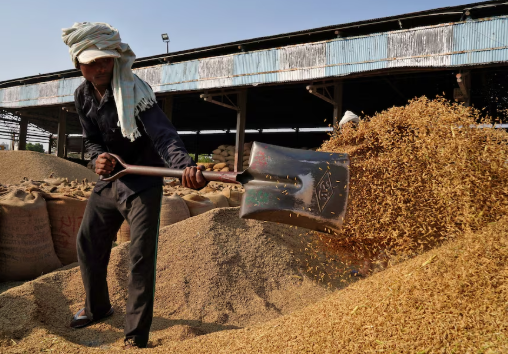
A labourer sifts rice crops in a grain market in Karnal in the northern state of Haryana, India, October 15, 2024.
“India is already a major player in the global rice trade, and our aim now is to tap buyers in less-served markets to further boost exports at a time when production and stocks are strong,” said Dev Garg, vice president of the Indian Rice Exporters Federation, on Monday.
India currently accounts for around 40% of global rice exports, exceeding the combined shipments of the next four largest exporters—Thailand, Vietnam, Pakistan, and the United States.
Government rice stocks have reached record levels after a series of bumper harvests in recent years. This year’s favorable monsoon is expected to further increase output, adding to already full state warehouses and prompting traders to accelerate exports.
In the crop year ending June 2025, India harvested a record 146.1 million tons of rice, significantly above local consumption of 120.7 million tons, according to the Food and Agriculture Organization.
Exporters have identified 26 target markets, including Japan and Mexico, aiming to expand India’s presence. Garg noted: “Many of these markets buy a lot of their rice from other suppliers, but we aim to raise our share by offering the grades they need.” He added that India produces multiple rice varieties suitable for export, which could also increase farmers’ incomes.
Indian suppliers plan to finalize export deals as leading global buyers gather at the Bharat International Rice Conference in New Delhi later this week.
The strategy focuses on leveraging surplus production and strong stock levels to strengthen India’s position in both established and emerging rice markets, while meeting diverse quality and grade requirements demanded by international buyers.
Overall, the combination of abundant production, record inventories, and targeted marketing efforts positions India to maintain its dominant role in the global rice trade while supporting domestic farmers through expanded export opportunities.