


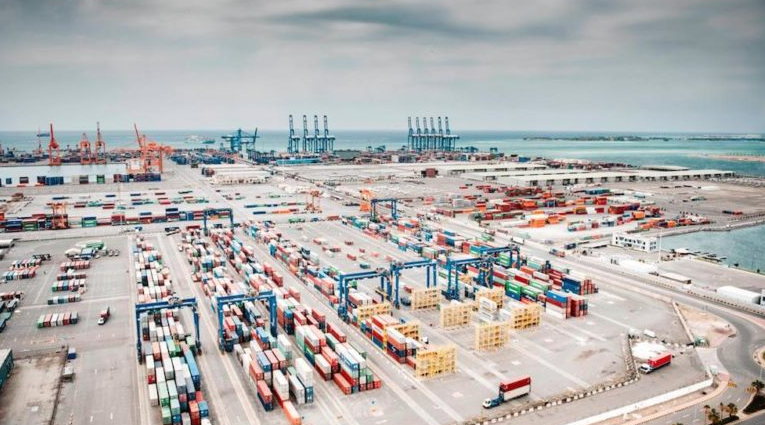
The project envisions a $450 million facility with a capacity of 2.6 million twenty-foot equivalent units (TEU), operating as a separate terminal adjacent to RSGT’s current operations. It would be developed under a sub-concession within RSGT’s long-term agreement with the Saudi Ports Authority (Mawani) and builds on an expansion clause in RSGT’s 2020 concession that allows for additional capacity at the Kingdom’s busiest Red Sea port.
RSGT group CEO Jens Floe said: “By bringing CMA CGM to consolidate their volumes on Terminal 4, we can accelerate upgrades and service enhancements while maintaining high standards across the terminal.” The plan reflects a shared commitment to boosting capacity, reliability, and technological development at Jeddah.
CMA CGM chairman and CEO Rodolphe Saadé described the initiative as a “new step in the development of Jeddah Islamic Port” that supports Saudi Arabia’s Vision 2030. He added that combining CMA CGM’s global network with RSGT’s local expertise will help position Jeddah as a “key logistics gateway on the Red Sea.”
The proposed terminal is set to accommodate the world’s largest containerships and will feature advanced equipment and digital systems to enhance operational efficiency and sustainability. The facility aims to strengthen Jeddah’s role as a regional transshipment hub connecting Europe, Asia, and Africa while expanding CMA CGM’s long-term presence in the Red Sea region.
This development marks a strategic collaboration between an international shipping leader and a regional port operator, reflecting growing demand for container throughput in Saudi Arabia and the wider Middle East. Terminal 4 is expected to integrate next-generation technology, including automated handling systems and digital monitoring tools, to optimize turnaround times and reduce environmental impact.
If realized, the joint venture would contribute to the modernization of Jeddah Islamic Port, providing additional capacity for global trade flows and supporting regional economic growth. CMA CGM and RSGT aim to leverage their respective strengths to deliver a terminal capable of meeting evolving maritime logistics requirements while maintaining high operational standards and sustainability benchmarks.
The project aligns with broader trends in global shipping, where port operators and logistics companies are increasingly investing in automation, digitalization, and eco-friendly solutions to enhance competitiveness and resilience in international trade.
