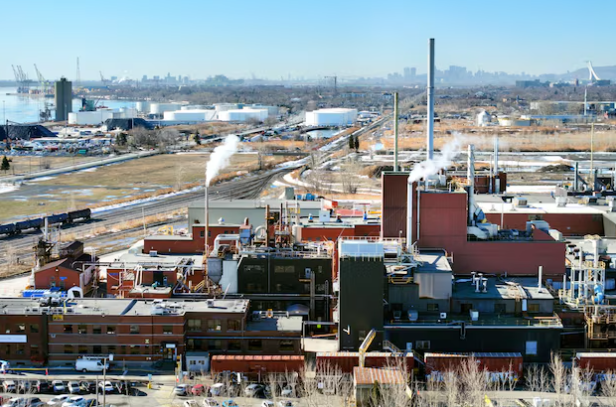
Glencore’s Canadian Copper Refinery (CCR) is seen in Montreal, Quebec, Canada March 18, 2025 in a drone view.
From January to September, Glencore’s own-sourced copper output decreased to 583,500 metric tons compared with the same period last year. In contrast, its cobalt production increased by 2,000 tons to reach 28,500 tons. The company adjusted its 2025 copper production guidance to a range between 850,000 and 875,000 tons, slightly below the previous range of 850,000 to 890,000 tons. Copper remains a key metal for energy transition technologies such as electric vehicles and renewable energy infrastructure.
Glencore said it expects its full-year marketing earnings before interest and tax (EBIT) to be around the midpoint of its projected range of $2.3 billion to $3.5 billion. The company’s trading division, which recorded a record profit of $6.4 billion in 2022, handles coal, oil, liquefied natural gas, and metals.
As one of the world’s major producers and exporters of thermal coal, Glencore anticipates total coal output of between 92 million and 97 million tons in 2024. By the end of the third quarter, it had produced 73.5 million tons, slightly higher than the 73.1 million tons recorded a year earlier. The company also projected that its steelmaking coal production in 2025 will range from 30 million to 35 million tons, following a year-to-date output of 24.7 million tons.
In May, Glencore reorganized its coal operations by consolidating its recently acquired Canadian coal assets into a single business unit managed from Australia. This decision followed a review of earlier plans to separate its entire coal division.
Overall, the company’s latest report highlights stable performance in its coal segment and modest gains in cobalt output, while copper production continues to face challenges from lower-grade ores. Glencore’s revised forecasts reflect its efforts to manage production levels and maintain profitability across its diverse portfolio of energy and metal assets.