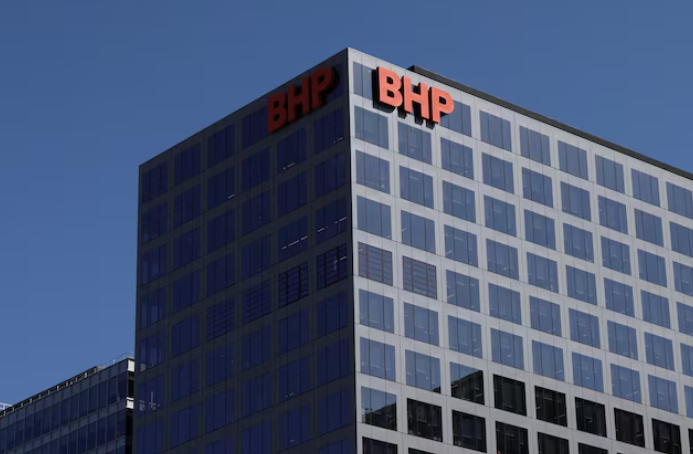
A BHP Group logo is displayed on their building in Adelaide, Australia, September 18, 2025.
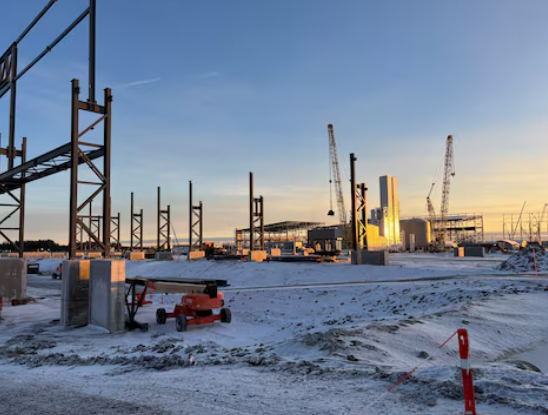
The project will be carried out at a demonstration plant within POSCO’s steelworks located in the port city of Pohang, South Korea. The facility will use a hydrogen-based ironmaking process combined with an electric smelting furnace to minimize carbon emissions during production. Construction of the plant is scheduled to begin soon, with commissioning targeted for early 2028. Once operational, it will have an annual capacity of 300,000 metric tons of near zero emissions iron.
The collaboration between BHP and POSCO is part of a broader effort to decarbonize the global steel industry, which remains one of the largest industrial sources of carbon dioxide. According to the International Energy Agency, steel production using traditional blast furnaces—currently the dominant technology worldwide—emits about 2.3 tons of carbon dioxide per ton of steel produced. The steel sector as a whole accounts for around 8% of global carbon emissions.
In contrast, steel produced from iron ore without the use of scrap and with emissions of 0.4 tons of carbon per ton of crude steel or less can be categorized as using “near zero emissions” iron. The hydrogen-based production method planned by BHP and POSCO aims to achieve this benchmark by replacing coal with hydrogen as the main reducing agent in the steelmaking process.
BHP stated that the initiative reflects its commitment to supporting the global transition toward low-carbon industrial operations. The company also noted that the project could help establish new markets for Australian iron ore by adapting it to future green steel technologies.
However, industry analysts have pointed out that Australian iron ore, which generally has a lower grade compared to Brazilian ores, requires additional processing to be used efficiently in low-carbon steelmaking. This may increase costs in a carbon-constrained global market. Nevertheless, BHP’s partnership with POSCO is seen as a proactive step to enhance the competitiveness of Australian ore and secure its role in future sustainable steel supply chains.
POSCO, one of the world’s leading steel producers, has been actively investing in cleaner production technologies and hydrogen-based steelmaking as part of its long-term decarbonization strategy. The partnership with BHP further strengthens both companies’ efforts to reduce emissions across the steel value chain.
The demonstration plant in Pohang will serve as a testbed for scaling up hydrogen-based ironmaking and electric smelting technologies, paving the way for commercial deployment in the next decade and supporting the steel industry’s global transition to lower-carbon production.