A crow flies between electric power transmission lines in Yokohama, south of Tokyo, September 15, 2014.
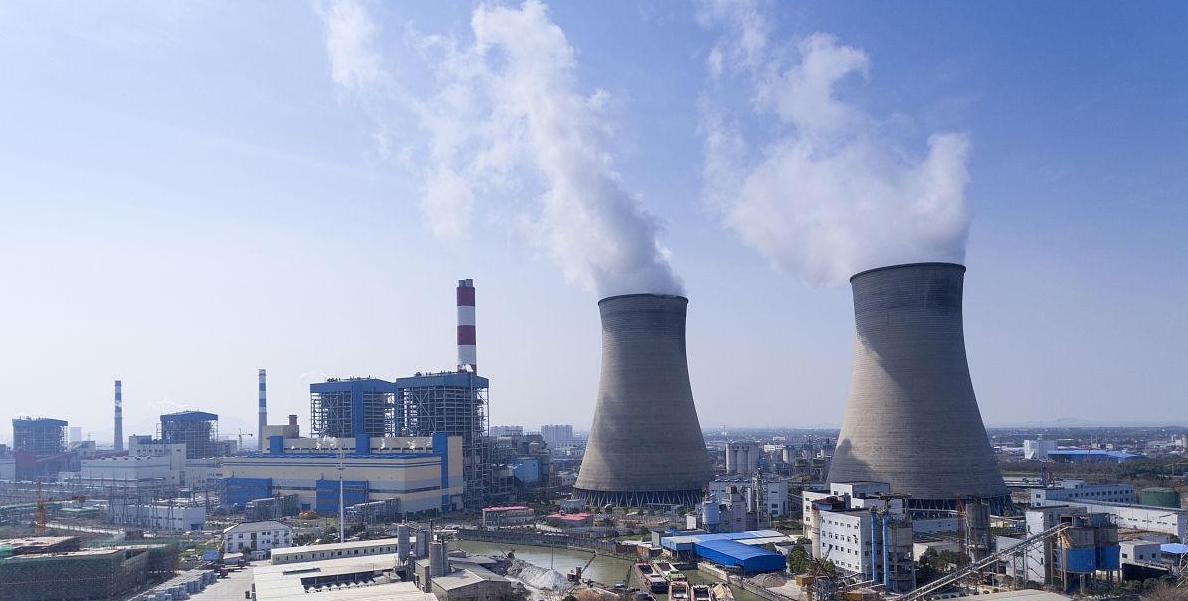
The two facilities scheduled for closure are the No.1 and No.2 units at the Takasago thermal power station in Hyogo Prefecture, western Japan. Both units, each with a capacity of 250 megawatts, began operation in 1968 and 1969 and use subcritical-pressure technology. These older plants are considered less efficient compared with newer thermal facilities. J-Power, which supplies wholesale electricity, currently relies on coal-fired generation for more than half of its domestic sales.
Kanno said: “To achieve our 2030 target, we must shut down remaining inefficient thermal units, but we also must maintain supply capacity .... we will decide through discussions with the authorities.” He identified two additional plants—the 700-MW No.3 unit at Takehara in Hiroshima Prefecture and the 1,000-MW No.1 unit at Matsuura in Nagasaki Prefecture—as potential future closure candidates. If these units are also retired, J-Power’s domestic generation capacity would fall by about 12%.
Japan’s overall electricity demand is expected to rise in the coming years due to growing consumption from data centers and semiconductor facilities, reversing a previous downward trend. In response, Kanno emphasized the importance of expanding renewable energy, especially offshore wind power, to support both carbon neutrality and energy security.
J-Power remains committed to developing the Oga-Katagami-Akita offshore wind project in northern Akita Prefecture, part of Japan’s second-round public auction framework. Kanno said: “We are pushing ahead with our Katagami project despite rising costs.” The project is being developed by a consortium including JERA, J-Power, Itochu, and Tohoku Electric Power, and plans to begin operations in autumn 2028 using wind turbines supplied by Denmark’s Vestas.
However, Japan’s offshore wind sector faces challenges from higher material, equipment, and labor costs, which have affected global projects. Mitsubishi Corp recently withdrew from three first-round auction projects, adding to market uncertainty. Kanno noted that the government is currently reviewing bidding rules for reopening the first-round auction and stated: “Any decisions should apply retroactively to second- and third-round projects.”
Through these developments, J-Power aims to advance its energy transition while maintaining a stable power supply. The company’s plan reflects Japan’s broader efforts to balance environmental objectives with energy reliability amid changing industrial and consumption trends.