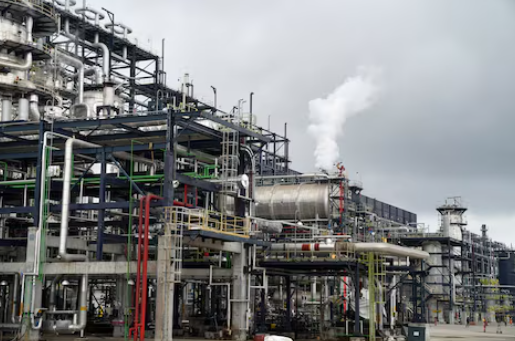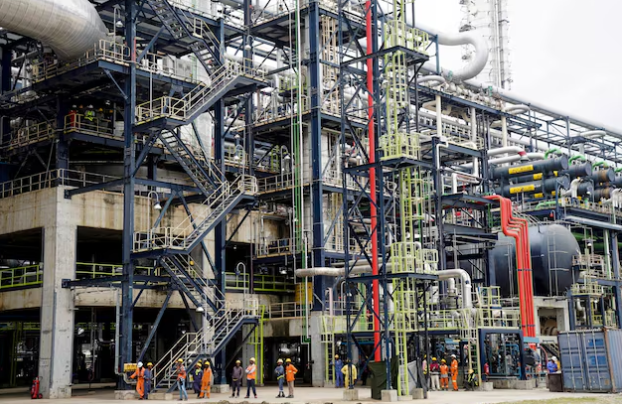
Workers stand in front of the Mild Hydrocracking Unit (MHC) at the Dangote Petroleum Refinery in Lagos, Nigeria, July 20, 2024.
Anthony Chiejina, spokesperson for the Dangote Group, said the tariff policy would help prevent the influx of substandard fuel products into the Nigerian market. The Dangote Group invested about $20 billion in building the refinery, which has a production capacity of 650,000 barrels per day. Chiejina noted that the company is working to expand production levels as part of its plan to stabilize national fuel supply.
“Our refinery is currently loading over 45 million litres of petrol and 25 million litres of diesel daily, which exceeds Nigeria’s demand,” Chiejina said. Since beginning petrol production in September 2024, the refinery has played a key role in reducing fuel prices and resolving long-standing shortages across the country. Industry analysts said the refinery’s operations have improved local availability and helped strengthen energy security by decreasing import reliance.
However, local fuel traders have expressed concern over the impact of the new import tariff and the refinery’s growing market share. Some traders believe that recent price cuts by the refinery may be aimed at undercutting competitors. They cautioned that if the tariff is not implemented carefully, it could hinder private fuel importation and potentially create a refining monopoly.
“Importers of petroleum products, which were a price-check mechanism against profiteering, will be out of business if not properly managed,” said Billy Harry, president of the Petroleum Products Retail Outlets Owners Association of Nigeria. “If local refineries are not properly regulated, monopoly could harm the market,” he added.
The Dangote Refinery began operations last year with the goal of transforming Nigeria’s energy sector by supplying refined products to both domestic and regional markets. The government expects the refinery to significantly reduce fuel imports and improve the country’s trade balance. While supporters view the new tariff as a necessary step to protect local industry and ensure energy independence, some market participants emphasize the need for transparent regulation to maintain fair competition and stable supply.
Overall, the ramp-up of production at the Dangote Refinery marks an important phase in Nigeria’s efforts to strengthen domestic fuel refining and reduce external dependence, while the success of the new tariff policy will depend on its careful and balanced implementation.