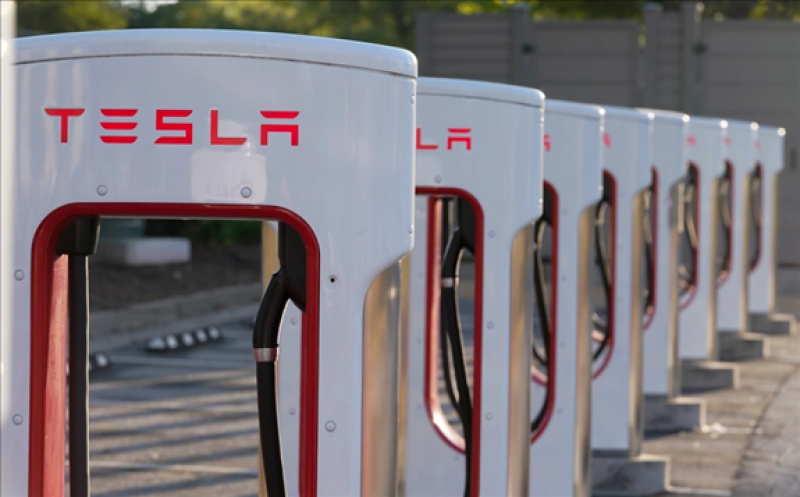
Tesla logo is seen in this illustration taken July 23, 2025.
If finalized, the agreement would mark another step by Tesla to diversify its supply chain and reduce dependence on specific markets for key components. Tesla has recently expanded partnerships with South Korean companies, including Samsung Electronics and LG Energy Solution, to source chips and batteries.
Energy storage batteries, which share similar chemical compositions with automotive batteries, are mainly used to power facilities such as data centers and renewable energy storage systems. South Korean manufacturers have increasingly turned to producing such batteries as demand for electric vehicle batteries has declined, particularly after changes to U.S. subsidy policies.
During an earnings call in October, Samsung SDI reported a decline in automotive battery demand from its joint venture partner Stellantis and announced plans to adjust some production lines at its Indiana plant in the United States to produce energy storage systems.
Sources told Reuters that discussions between Tesla and Samsung SDI involve an annual supply volume of around 10 GWh. The Korea Economic Daily, which first reported the potential agreement, said the deal would span three years and be worth more than 3 trillion won. However, Samsung SDI stated that negotiations are ongoing and details have not yet been finalized, while Tesla has not provided any official comment.
Tesla previously noted in its October earnings call that its energy storage business has encountered challenges due to heightened competition and tariffs. The company stated: “Currently all sales procured are from China while we’re still working on other alternatives.”
For Samsung SDI, the potential agreement aligns with its efforts to expand in the growing energy storage market and offset the slowdown in the automotive segment. The company, a key player in the global battery industry, is leveraging its technological expertise to adapt production capacity and secure long-term supply deals.
The possible partnership would also reflect Tesla’s strategy to strengthen its supply chain resilience by engaging multiple regional suppliers. Over recent months, Tesla has been exploring new collaborations with Asian manufacturers to secure stable sources of advanced batteries and components needed for both electric vehicles and large-scale energy storage systems.
Industry analysts believe that if confirmed, the deal could provide significant momentum for Samsung SDI’s transition toward diversified battery applications, while offering Tesla an additional supply option to support its expanding energy business.
The discussions highlight the growing role of South Korean firms in the global energy storage supply chain and the increasing importance of battery technology in advancing renewable energy integration and efficient power management worldwide.