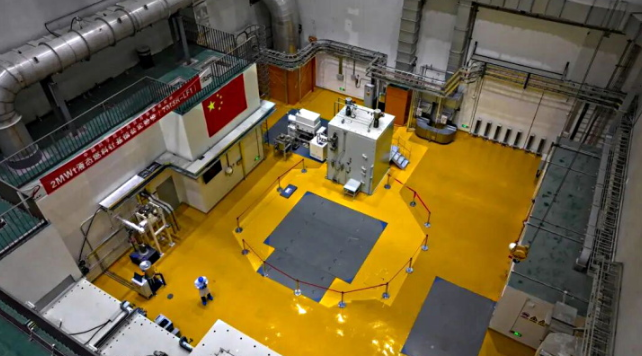
Construction of the 2 MWt TMSR-LF1 reactor began in September 2018 and was initially scheduled for completion in 2024, but work was accelerated and completed by August 2021. The Ministry of Ecology and Environment approved commissioning in August 2022, and an operating licence was granted in June 2023. The reactor reached first criticality—a sustained nuclear reaction—on 11 October 2023.
The TMSR-LF1 uses fuel enriched to less than 20% uranium-235, contains a thorium inventory of about 50 kg, and operates with a conversion ratio of approximately 0.1. It features a fertile blanket of lithium-beryllium fluoride (FLiBe) enriched to 99.95% Li-7 and is fueled with uranium tetrafluoride (UF4).
The institute stated: “In October 2024, the world's first thorium addition to a molten salt reactor was completed, making it the first in the world to establish a unique molten salt reactor and thorium-uranium fuel cycle research platform.”
Deputy Director Li Qingnuan explained that the reactor has been continuously generating heat through nuclear fission since first reaching criticality. Unlike conventional pressurised water reactors, which require periodic shutdowns to replace fuel, the TMSR-LF1 uses liquid fuel uniformly dissolved in the molten salt coolant, allowing refueling without halting operations. Li noted: “This design not only improves fuel utilisation but also significantly reduces the generation of radioactive nuclear waste, which is one of the advantages of thorium-based molten salt reactors.”
The November 1 announcement confirms that TMSR-LF1 has produced the first experimental data on thorium fuel in a molten salt reactor, making it the only operational MSR globally to incorporate thorium successfully. SINAP highlighted this as a milestone breakthrough, providing core technological support for large-scale thorium utilization in China and advancing fourth-generation nuclear energy systems.
Director Dai Zhimin said the institute will accelerate technological iteration and engineering transformation, with plans to develop a 100 MWt thorium-based molten salt reactor demonstration project and achieve demonstration applications by 2035.
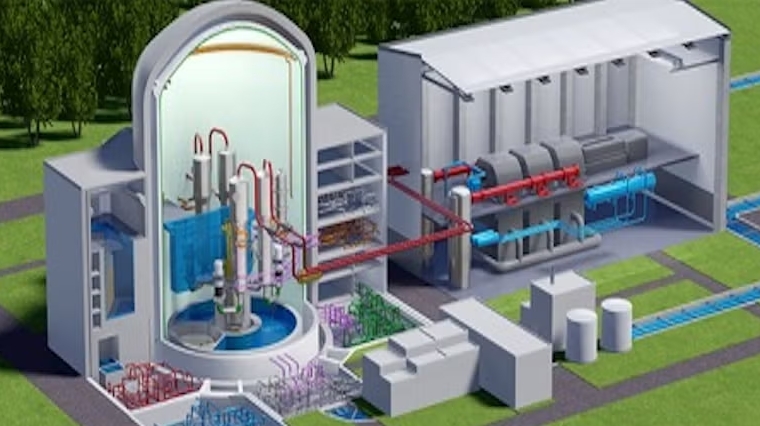
Molten salt reactors (MSRs) use molten fluoride salts as primary coolant at low pressure and can operate with epithermal or fast neutron spectrums, accommodating a variety of fuels. Interest in MSRs today largely focuses on thorium utilization to breed fissile uranium-233, initially requiring a fissile material such as plutonium-239. Despite challenges in commercialisation, TMSR-LF1 demonstrates a significant step forward in advanced nuclear technology, fuel efficiency, and reduced radioactive waste generation.
The successful thorium conversion underscores China’s progress in next-generation nuclear energy research and positions molten salt reactors as a promising technology for safe, low-waste, and high-efficiency nuclear power.