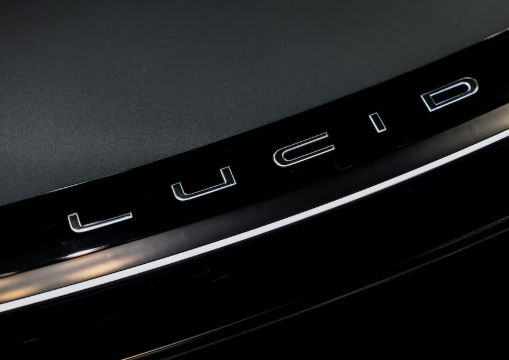
Lucid signage is displayed on a vehicle during the New York International Auto Show Press Preview in New York City, U.S., April 16, 2025.
Lucid reported revenue of $336.6 million for the quarter ended September, representing a 68% increase year-on-year but below analysts’ estimates of $379.1 million, according to LSEG data. The company also posted a larger-than-anticipated adjusted loss of $2.65 per share, compared with analysts’ forecast of a $2.27 loss. Deliveries had risen earlier in the quarter, partly supported by the now-expired $7,500 U.S. federal tax credit on electric vehicle purchases.
The company said the Public Investment Fund, its largest shareholder, had agreed to raise Lucid’s existing credit facility from $750 million to about $2 billion. Although the facility remains unused, Lucid emphasized that the additional funding would be vital as it scales up production of its newly launched Gravity SUVs and prepares to introduce a more affordable mid-size model in 2026.
Winterhoff explained that the company’s revised forecast reflected continuing supply disruptions, including a chip shortage, restricted availability of rare earth materials, and the impact of a September fire at an aluminum supplier. These factors slowed output for both the Air luxury sedan and the Gravity SUV. “We will end up at the lower end of that range,” Winterhoff said, referring to the previously reduced production target of 18,000 to 20,000 vehicles announced in August. “Even if we solve it, it doesn’t mean that it’s none.”
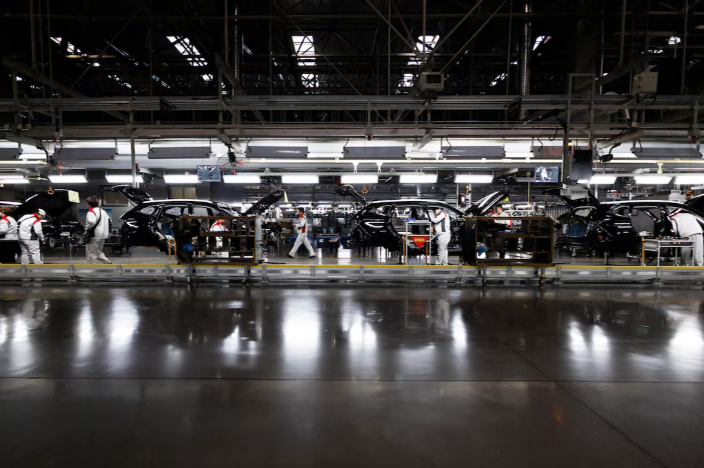
To mitigate the production delays, Lucid has implemented a second shift at its factory and resolved several component bottlenecks. According to market data provider Visible Alpha, six analysts on average expect the company to produce 17,320 vehicles in 2025.
Chief Financial Officer Taoufiq Boussaid said Lucid anticipated partial relief from the U.S. administration’s 3.75% tariff offset for domestically produced electric vehicles. He noted that tariffs were expected to affect the company’s gross margin by 8%–10% in 2025, down from 21% in the second quarter.
Despite near-term difficulties, Lucid remains focused on strengthening its product lineup and operational capacity. The company views the Gravity SUV and its upcoming mid-size model as key to expanding its customer base beyond the luxury segment. Winterhoff reaffirmed that Lucid continues to make progress on cost optimization and efficiency improvements, even as global supply pressures persist.
Overall, the company’s revised outlook underscores the ongoing challenges facing electric vehicle manufacturers amid shifting market conditions and supply chain constraints, while highlighting Lucid’s efforts to sustain growth through strategic funding and new model launches.