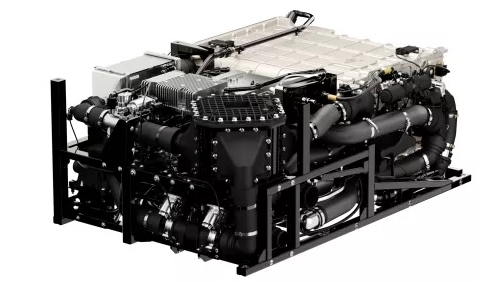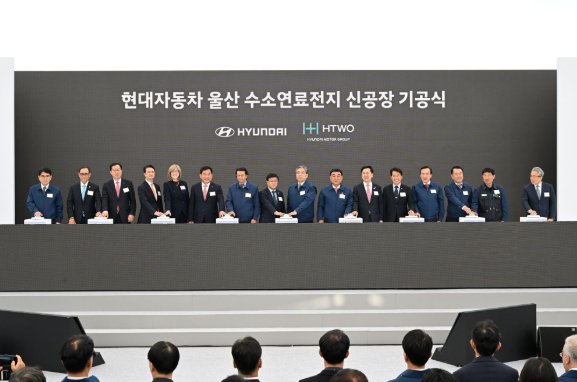
The plant, scheduled for completion in 2027, will occupy 43,000 square meters on the site of a former internal combustion engine transmission plant. Operating under HMG’s hydrogen brand and business platform HTWO, which stands for ‘Hydrogen for Humanity,’ the facility will integrate chemical processing and assembly operations, with an annual production capacity of 30,000 fuel cell units. Hyundai plans to deploy robotics technologies to reduce worker strain while improving operational efficiency. Advanced monitoring systems will detect even minor safety hazards to enhance workplace safety.
Jaehoon Chang, Vice Chair of HMG, said: “This plant embodies Hyundai Motor Group’s strategic commitment to advancing the hydrogen society transition. It will serve as a critical foundation for securing national economic growth momentum and establishing Korea’s leadership in the global hydrogen industry.”
Hyundai has emphasized that the groundbreaking ceremony will provide a platform for collaboration among government bodies, local authorities, and industry stakeholders. This coordinated approach aims to accelerate the growth of the hydrogen economy while strengthening Hyundai’s strategic partnerships. The company intends for the plant to serve as an advanced manufacturing hub that supports both carbon neutrality objectives and ecosystem development in the hydrogen sector.
The new facility is expected to play a pivotal role in Hyundai’s global hydrogen strategy. By producing fuel cells and electrolyzers at scale, the plant will support the broader adoption of hydrogen-powered mobility solutions across multiple industries. Hyundai’s investment also aligns with national goals for economic growth and technological leadership in clean energy.
Through this project, Hyundai aims to reinforce its position in the hydrogen market, expand its technological capabilities, and provide solutions that contribute to a sustainable, low-carbon future. The Ulsan plant is part of HMG’s broader commitment to developing hydrogen infrastructure, promoting environmentally friendly transport solutions, and creating a comprehensive ecosystem for hydrogen production, distribution, and utilization.
By combining advanced manufacturing technologies, strategic partnerships, and safety-focused operations, Hyundai expects the facility to become a cornerstone of the global hydrogen industry while supporting domestic economic development and innovation. The plant highlights the company’s long-term vision for sustainable mobility and its role in shaping the hydrogen economy worldwide.