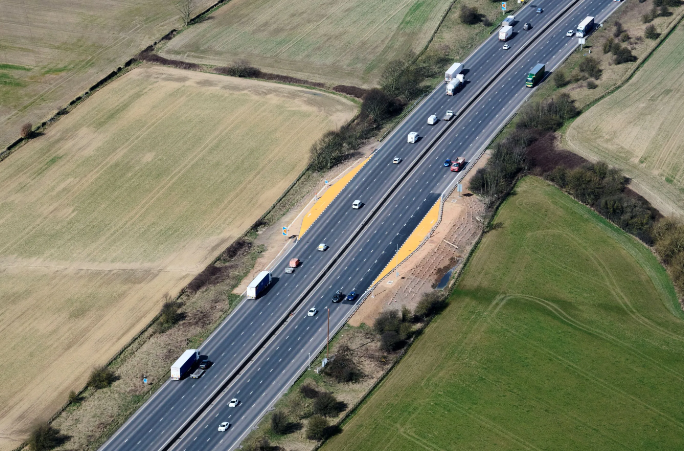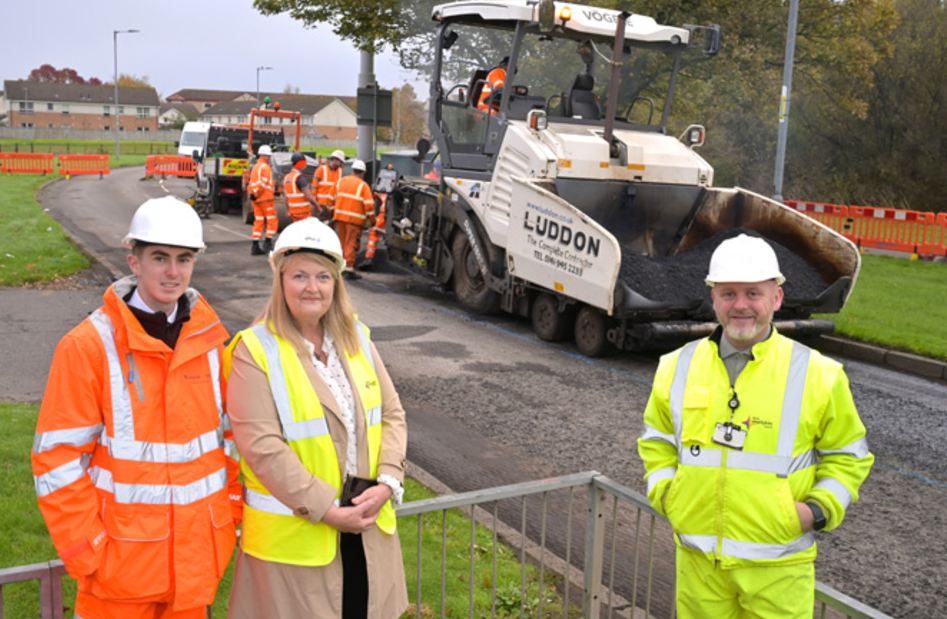
The pilot formed part of the Live Labs 2 programme, with half a tonne of EcoFlakes incorporated into a traditional hot rolled asphalt mix on Chapelknowe Road in Motherwell. North Lanarkshire Council said the recycled plastic replaces oil-based polymers in asphalt and could reduce carbon emissions by up to 20%. Since being laid earlier this month, the road section has been closely monitored for performance and environmental impact.
This initiative follows the council’s recent use of biochar in road surfacing, which acts as a carbon sink by absorbing and storing carbon. Cllr Helen Loughran, convener of the Environment and Climate Change Committee, said: “I'm proud that North Lanarkshire Council is leading the way on this important work. As the only council in Scotland to be involved with Live Labs 2 we really are blazing a trail for others to follow. This is a fantastic example of how local authorities can lead the way in tackling climate change. By trialling cutting-edge new materials like EcoFlakes and biochar, we're showing that sustainable infrastructure is not only possible but practical.”
Live Labs 2 is a three-year, UK-wide, £30 million project funded by the Department for Transport (DfT) and launched by ADEPT, with the goal of decarbonising local highway networks. North Lanarkshire Council, in partnership with Amey, leads the north campus for the Centre of Excellence for Decarbonising Roads, while Transport for West Midlands, supported by Colas, leads the south campus. This collaboration is creating a national framework for knowledge sharing and joint innovation.
The trial marks a step forward in sustainable road construction, combining innovative materials with established asphalt technology. By integrating recycled plastics and biochar into road surfaces, the council aims to extend the lifespan of roads, reduce maintenance needs, and cut carbon emissions. The project also sets a precedent for other local authorities in the UK seeking practical solutions for climate-friendly infrastructure.
Monitoring of the Chapelknowe Road section will continue over the coming months to assess durability, performance, and environmental impact, with findings expected to inform future adoption of EcoFlakes and similar materials across the national highway network. The initiative reflects a growing focus on sustainable construction methods and circular economy principles in public infrastructure projects.