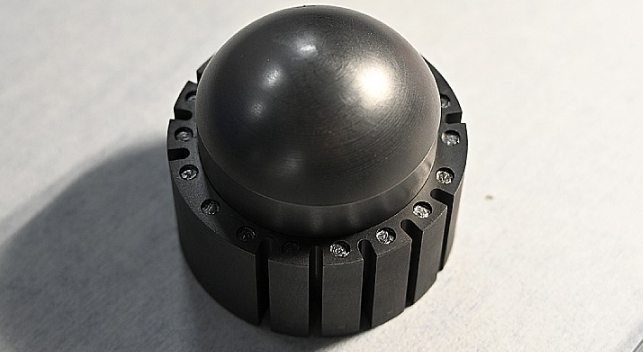
One of 16 TRISO-X fuel pebbles that are undergoing testing
TRISO-X is a specialized version of TRISO (tri-structural isotropic) fuel, fabricated into billiard ball-sized pebbles. Each pebble contains a uranium, carbon, and oxygen kernel encapsulated by three layers of carbon- and ceramic-based materials. This structure prevents the release of radioactive fission products and allows the fuel to withstand extreme radiation and temperatures far beyond conventional nuclear fuels. The US Department of Energy (DOE) notes that the fuel cannot melt under commercial high-temperature reactor conditions.
The X-energy Pebble Reactor Test, called XPeRT, will use INL’s Advanced Test Reactor (ATR) to irradiate the fuel. ATR, a pressurized water reactor, produces neutrons rather than heat, enabling evaluation of TRISO-X performance under different power levels, temperatures, and burnup conditions relevant to the Xe-100 design. After irradiation, post-test examinations at INL and Oak Ridge National Laboratory will measure fission product retention and structural stability to ensure reliability under expected commercial operations.
Dan Wachs, National Technical Director for DOE's Advanced Fuels Campaign, said: “The test marks INL's first irradiations of TRISO fuel for advanced reactors since 2020 and the first use of a new lead-out test capability at ATR that makes these advanced fuel tests possible.”
TRISO-X has operated a pilot fabrication facility at Oak Ridge National Laboratory since 2016. X-energy plans to build two additional facilities at Oak Ridge for commercial Xe-100 deployment, with the first, TX-1, already under construction. The company is also participating in the DOE’s Fuel Line Pilot Program, established to develop a domestic supply chain for advanced nuclear fuels.
X-energy CEO Clay Sell said: “What began in Oak Ridge as a pioneering effort to advance TRISO manufacturing is now leading the way in qualifying the fuel that will power the next generation of reactors. TRISO-X embodies decades of US innovation in fuel design and this testing programme brings us one step closer to redefining the standard for safety and reliability in nuclear energy.”
The first Xe-100 deployment is planned at Dow’s Seadrift site on the Texas Gulf Coast, supplying both power and high-temperature heat for industrial-scale operations. X-energy and Amazon have also committed to achieving more than 5 GW of new nuclear capacity by 2039. Initial projects include a joint plan with Energy Northwest in Washington state to build up to 12 SMRs near the Columbia Generating Station, advancing the commercialization of advanced nuclear technology in the United States.
This testing and manufacturing effort represents a significant step toward safe, high-efficiency nuclear energy, supporting both industrial and electricity generation applications while advancing domestic nuclear fuel capabilities.