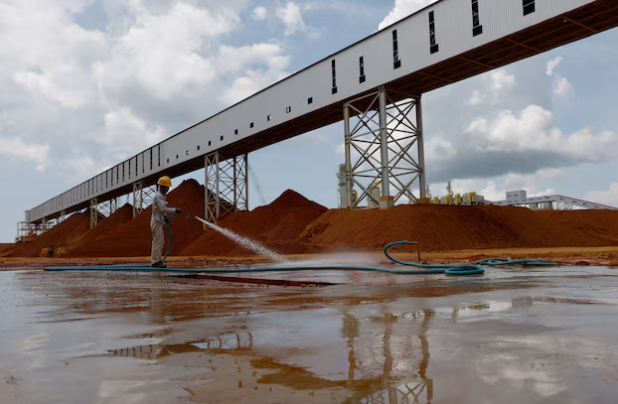
Mounds of bauxite are stored at Shandong Nanshan Aluminium's integrated aluminium plant in Bintan, Indonesia May 5, 2023.
In the U.S. market, buyers typically pay the benchmark aluminium price on the London Metal Exchange (LME) plus a premium that includes costs such as freight and taxes. Since the tariff increase, the duty-paid Midwest premium has surged sharply, reaching a record 88.10 cents per pound, equivalent to $1,942 per metric ton, on Friday. With the LME aluminium price at $2,850 per ton, a U.S. buyer in the spot market would now pay around $4,792 per ton.
At this benchmark price, the import duty amounts to $1,425 per ton, compared with about $560 per ton at the beginning of the year. Market analysts attribute the price escalation not only to higher tariffs but also to falling U.S. aluminium inventories and strong expectations that the new duties will remain in place for the foreseeable future.
Consultancy Harbor Aluminum noted that many industry participants believe the tariffs will be permanent, especially since there have been no new exemptions for Canada after trade negotiations between the two countries were halted in October. According to Trade Data Monitor, U.S. aluminium imports from Canada totaled more than 2.7 million tons last year, accounting for about 70% of total imports.
Dmitri Ceres from U.S.-based aluminium trader PerenniAL said: “Trump basically said no deal until the end of his term. So even the optimists around a potential deal have retreated from their position for now.” His remarks reflect growing uncertainty over the prospects for renewed trade discussions between the two countries.
U.S. consumers also face intensified competition for aluminium due to global supply constraints. Analysts point out that China’s 45 million ton production cap has limited growth in global aluminium availability, while production outside China has also declined.
Tom Price, an analyst at Panmure Liberum, said the aluminium market could face a deficit of about 1.8 million tons this year. “Over the last 2-3 years, China's net exports of refined metal and semi-fabricated products have fallen by 900,000 tons a year to 1.9 million tons a year,” he said. “Over the same period, aluminium metal production outside China has fallen 1.1 million tons a year. Together, that’s a two million ton decline in aluminium availability outside China.”
The combination of reduced supply, trade tensions, and high import tariffs has intensified cost pressures across the U.S. aluminium market, significantly affecting manufacturers and consumers dependent on the metal for industrial and commercial applications.