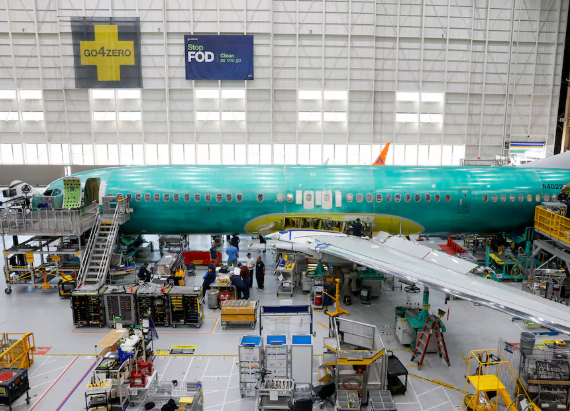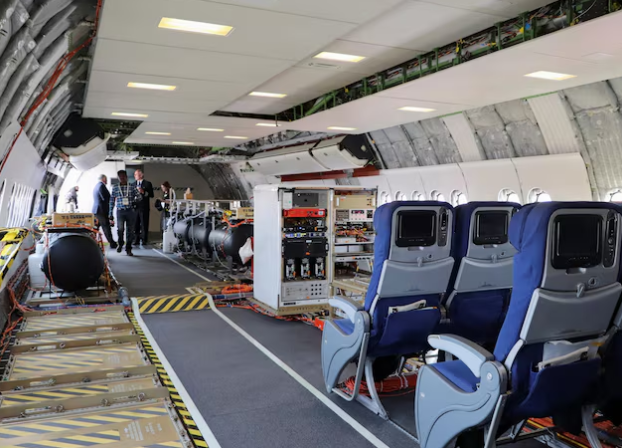
A general view of the inside of a Boeing 777X at Begumpet airport, Hyderabad, India, January 18, 2024.
The 777X program, a key component of Boeing’s long-term wide-body aircraft strategy, aims to succeed its earlier 747 and 777 models. However, repeated delays in certification and production have pushed back deliveries by several years, resulting in over $15 billion in charges and adding pressure to the company’s financial position.
The delays have also opened opportunities for European rival Airbus (AIR.PA) and its competing A350 series to strengthen their presence in the global wide-body jet market, particularly as international travel demand continues to recover.
In its earnings report last month, Boeing confirmed that it had postponed the first delivery of the 777X to 2027, while also taking a higher-than-expected $5 billion charge related to the program. The company has updated its certification timeline accordingly, with expectations that testing and regulatory approvals will continue through the next two years.
The 777-9, the first variant of the 777X family, is designed to offer greater fuel efficiency and passenger capacity compared with previous models. It is expected to play a central role in Boeing’s strategy to compete in the long-haul market once deliveries begin.
Earlier this month, Boeing also received FAA approval to increase production of its 737 MAX aircraft from 38 to 42 units per month, signaling a gradual recovery in its commercial aircraft output following earlier restrictions.
Despite the ongoing challenges surrounding the 777X program, Boeing’s broader operations have shown signs of stabilization as the global aviation sector continues to recover from earlier disruptions.
Meanwhile, U.S. stock markets rose on Monday, with the Dow Jones Industrial Average climbing 0.8%, the S&P 500 gaining 1.5%, and the NASDAQ advancing 2.25%. Analysts noted that optimism about corporate earnings and progress in industrial sectors, including aviation, contributed to the day’s upward movement.
The approval for the next phase of the 777-9’s certification marks an important milestone for Boeing, reflecting steady progress toward eventual commercial service as the company works to strengthen its position in the global wide-body aircraft market.