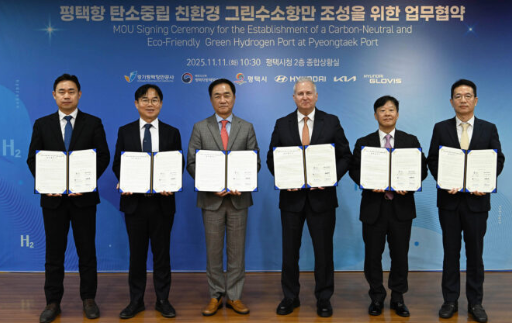
Under the agreement, Hyundai Motor Company will oversee hydrogen-related business strategy. Kia Corporation and Hyundai Glovis will operate hydrogen fuel cell power generators at their facilities within the port, demonstrating large-scale hydrogen application across port operations. The project plans to connect a hydrogen production complex near the port with a 15-kilometer pipeline to establish a hydrogen-based power supply system. Joint technology development and demonstration projects for fuel cell generators are also included.
The partners intend to transform these plans into a comprehensive energy framework for port operations. The framework will ensure reliable power through fuel cell generation and an integrated hydrogen supply network. Additional initiatives include expanding hydrogen-powered transport vehicles and port equipment, and installing hydrogen refueling stations to support operational efficiency.
Ken Ramirez, Head of Global Energy and Hydrogen Business Division at HMG, stated: “Hyundai is honored to jointly drive this important collaboration as a public-private partnership aimed at delivering real-world hydrogen applications to achieve the goals of both the Ministry of Oceans and Fisheries’ ‘Hydrogen Port’ policy and the Ministry of Land, Infrastructure and Transport’s ‘Hydrogen City’ policy. It represents the first domestic initiative to establish a broad hydrogen ecosystem for port decarbonization, leveraging Pyeongtaek Port’s advanced infrastructure.”
Long-term plans include developing hydrogen and ammonia bunkering facilities to support future zero-emission vessels, along with exploring alternative maritime power (AMP) systems to reduce emissions from berthed ships. The project also seeks to expand the green hydrogen supply chain through ammonia imports and extend hydrogen-based operations to improve energy stability and efficiency.
HMG and Pyeongtaek City will collaborate with Gyeonggi Pyeongtaek Port Corporation (GPPC) and the Pyeongtaek Regional Office of Oceans and Fisheries to focus on business expansion strategies and regulatory improvements. The initiative is designed to integrate technology, infrastructure, and operational practices to establish a replicable hydrogen-powered port model.
This collaboration marks a significant step toward creating a domestic hydrogen ecosystem for maritime operations, supporting South Korea’s broader decarbonization strategy, and advancing fuel cell technology in industrial and transport applications. The project is expected to serve as a blueprint for other ports aiming to adopt hydrogen and achieve carbon-neutral goals.
The partnership highlights Hyundai Motor Group’s commitment to sustainable energy solutions and demonstrates how public-private collaborations can accelerate the adoption of hydrogen technology in key industrial sectors, promoting clean energy, operational efficiency, and environmental benefits in line with national policy objectives.