Graphene, a zero-bandgap semi-metal, has long been studied in solar energy research for its use in transparent electrodes, transport layers, contacts, and protective coatings. While each graphene layer absorbs only about 2.3% of visible light—making it inefficient for solar energy harvesting on its own—its exceptional electrical and optical properties allow for unique photovoltaic behavior when integrated into hybrid devices.
“Researchers have explored various techniques to enhance the power conversion efficiency of these solar cells, including optimizing graphene sheet thickness, refining the integration process with the silicon substrate, incorporating additional interfacial materials, doping silicon substrates, employing textured silicon surfaces, and using silicon nanowires,” the scientists stated.
The research team selected graphene-based solar cells over traditional photovoltaic (PV) cells because graphene can also capture kinetic energy, enabling the system to function even in the absence of sunlight. This dual capability provides a distinct advantage for IoT sensors that need continuous, low-power operation in varying environmental conditions.
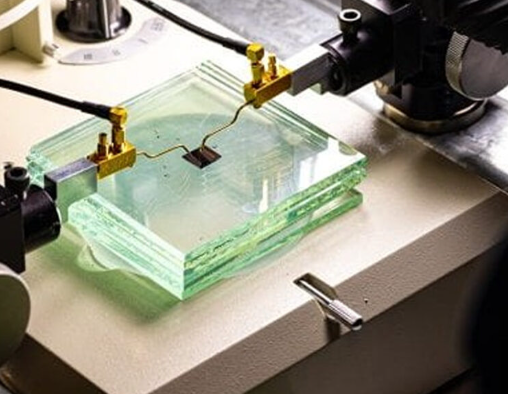
To fabricate the device, the team used commercially available 500-micrometer-thick n-type silicon wafers coated with a thick thermal oxide layer. The top oxide was patterned and etched directly on the silicon surface, followed by additional patterning and metal deposition to form two gold bonding pads. Multilayer graphene was then deposited on both the exposed silicon areas and the bonding pads.
“Due to the transparency of graphene, light passes through and is absorbed by the silicon substrate,” the researchers explained. They designed the cells in a small array, connecting them in series to charge storage capacitors to the required voltage level.
Instead of conventional batteries, the system uses supercapacitors to minimize power consumption and extend operational lifetime. Three storage capacitors were assigned distinct functional roles to support system performance.
Laboratory results demonstrated that the sensor system can operate autonomously without external power. Its processor remains in standby mode most of the time, activating only as needed. “The storage capacitors continuously power our temperature sensor system, even while being intermittently recharged by the solar cells,” the team emphasized.
Details of the study were published in the Journal of Vacuum Science & Technology B under the title “Array of mini-graphene-silicon solar cells intermittently recharges storage capacitors powering a temperature sensor.” The researchers concluded: “The paper confirms it’s possible to create an ultra-low power temperature sensor using graphene-based solar energy.”