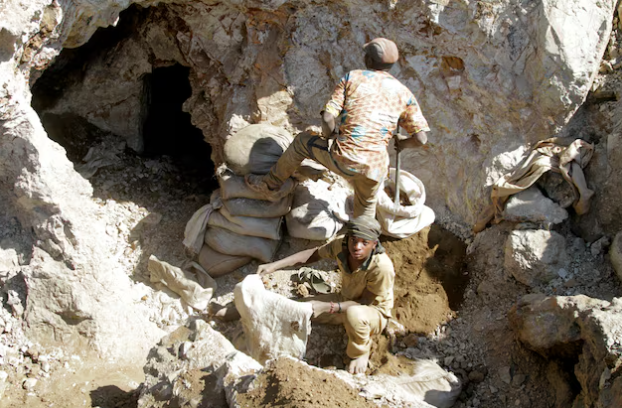
Artisanal miners work at the Tilwezembe, a former industrial copper-cobalt mine, outside of Kolwezi, the capital city of Lualaba Province in the south of the Democratic Republic of the Congo, June 11, 2016.
Unregulated artisanal cobalt does not pass through formal oversight mechanisms, making supply difficult to verify and exposing producers to risks such as government confiscations. This situation reduces the amount of certified material available in the market and raises costs for traceable cobalt. In an effort to address oversupply and stabilize prices, Congo implemented export quotas in October following an export suspension earlier in the year. Managed by regulator ARESCOM, the quota system restricts exports and encourages domestic processing by making shipments of unprocessed cobalt less favorable.
Entreprise Générale du Cobalt (EGC), established in 2019 as a subsidiary of state-owned Gécamines, announced the initial 1,000 metric tons of traceable artisanal cobalt at a ceremony held on Thursday in Kolwezi, a major mining center. The company stated that its traceability system is designed to strengthen the supply chain and align artisanal production with international environmental, social, and governance expectations. At the event, CEO Eric Kalala said: “The vision is to transform artisanal cobalt into a strategic asset under Congolese control.” He also said: “Every ton purchased by EGC must reflect not only the value of the mineral, but also the dignity of those who extract it.”
Global cobalt demand is projected to grow by about 40% by 2030, supported by rising use of electric vehicles and energy storage technologies, according to the International Energy Agency. Automakers and electronics manufacturers increasingly require evidence of responsible sourcing, creating additional pressure to remove unsafe conditions and other concerns in artisanal mining sites.
Kalala said that EGC plans to increase production beyond the first 1,000 tons while developing additional refining capacity and expanding its share of the artisanal segment. The company has not yet stated how the initial batch of traceable cobalt will be marketed or sold.
The milestone in Kolwezi reflects ongoing efforts to formalize artisanal mining and strengthen transparency within the cobalt supply chain.