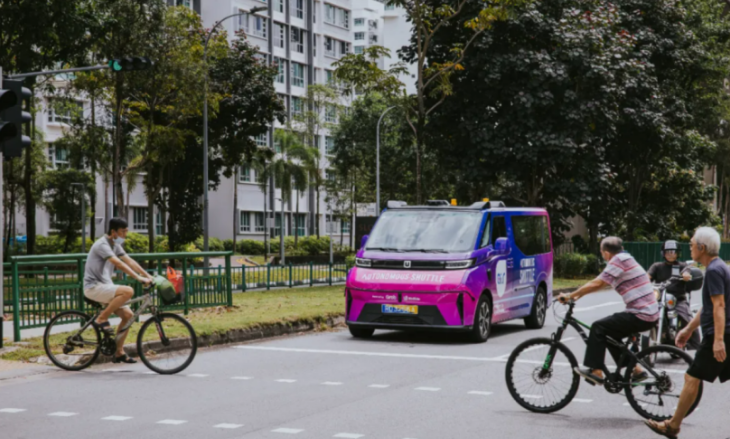
Initial tests of WeRide’s GXR robotaxi in Punggol began in mid-October, making it Singapore’s first trial of the vehicle. With the LTA approval, WeRide and Grab plan to scale up the program, aiming to quadruple trial runs on designated feeder routes by the end of 2025.
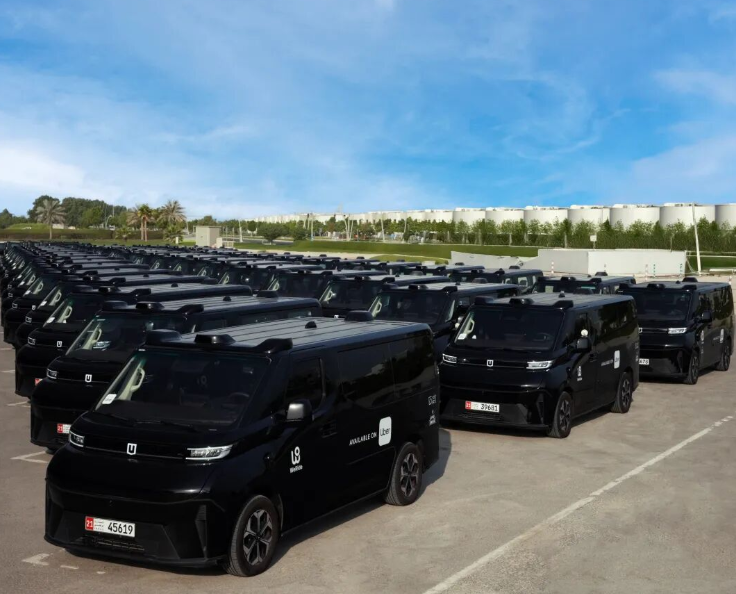
The Ai.R initiative is designed as a public-facing autonomous mobility service jointly operated by the two companies. The fleet includes 11 WeRide vehicles — 10 GXR robotaxis with five seats each and one Robobus shuttle carrying up to eight passengers. The current trial phase aims to validate performance and safety ahead of a commercial launch. Once operational, Ai.R will serve two dedicated feeder routes within Punggol, with the first public riders expected in early 2026. This will make Punggol the first residential district in Singapore to host an autonomous shuttle service.
During the trials, the vehicles collect and analyze real-world traffic data to train AI driving models for Singapore’s environment. The system adapts to unique traffic patterns, infrastructure layouts, and local driver and pedestrian behaviors. Tests also expose the vehicles to varied weather conditions, such as heavy rain and strong sunlight, to ensure reliable performance at all times. Continuous refinement will focus on maneuvering precision, handling dense urban scenarios, and improving docking at pickup and drop-off points.
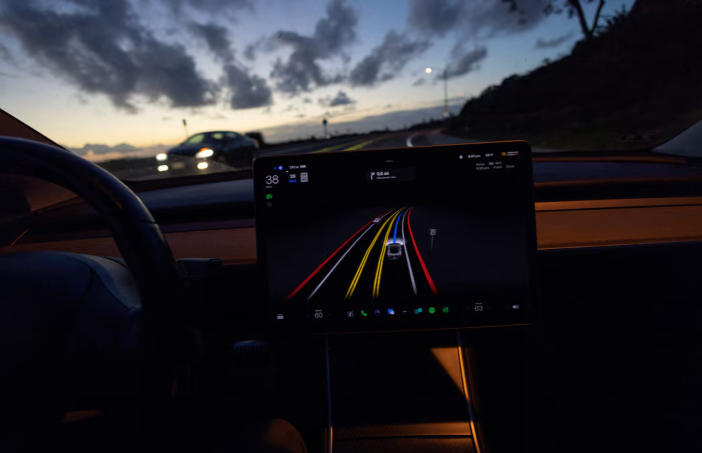
Both the GXR and Robobus models use a perception suite that combines lidar and cameras, providing 360-degree sensing with detection ranges up to 200 meters. The system is designed to maintain obstacle recognition even in rain, allowing faster responses to potential hazards.
For safety during testing and early public operations, each vehicle will have a trained safety operator monitoring system behavior in real time. WeRide and Grab’s training arm, GrabAcademy, is preparing the workforce for this role. The first cohort, consisting of more than ten Grab drivers transitioning into safety operator roles, has completed classroom and closed-course instruction and is now undergoing on-road training.
The trial represents a major milestone in autonomous mobility for Singapore, combining advanced AI-driven technology with robust operational and safety protocols. The program is expected to provide critical insights into public acceptance, route optimization, and system reliability, paving the way for future autonomous transport deployment in urban residential areas.