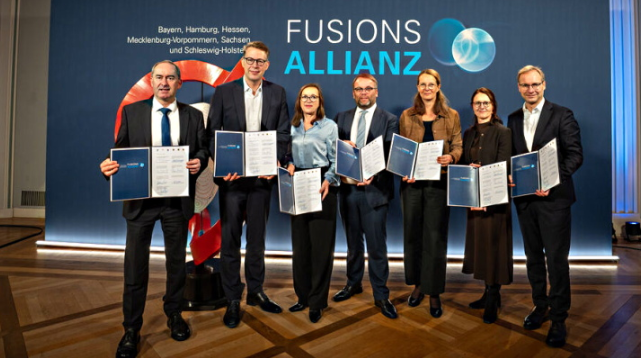
A ceremony was held in Munich on 31 October to mark the creation of the alliance
"Working together, they intend to advance this technological development quickly, effectively, and with strategic coordination," the states said in a joint statement. "The goal of the Fusion Alliance is the research, development, construction, and operation of commercially used fusion reactors - through cooperation between industry and research institutions. Germany aims to assume a leading global role in this future technology and realise the dream of a clean, always-available energy source."
Each state has already invested substantially in fusion studies. These resources will now be combined, interconnected, and greatly enlarged. The partners have committed to tight collaboration and assistance, aligning with Germany's High-Tech Agenda and the Federal Government's Action Plan on Nuclear Fusion.
Initiatives encompass expanded education for emerging researchers, engineers, and technicians in fusion fields; enhanced networking via interdisciplinary master's programs, doctoral studies, and seminars; shared utilization of current research facilities; reciprocal access to partner installations for businesses; partnerships with supply chain companies that have proven expertise from prior facility builds; and joint efforts with European research organizations and enterprises.
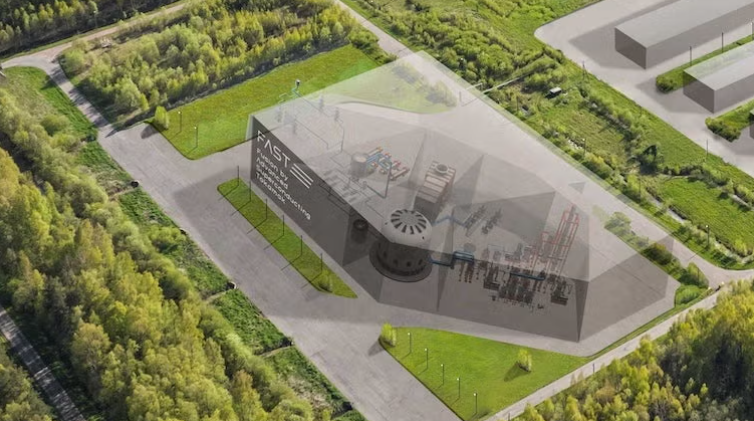
The alliance pursues two primary fusion methods: laser-driven inertial confinement and magnetic confinement. "Exploring both technologies in parallel distributes technological risks and increases the likelihood of finding the most economical solutions for a reliable energy supply across diverse application requirements," the states explained. Specific responsibilities for each state are outlined in the signed framework document.
The group welcomes additional technologies and participants.
On October 1, the German federal cabinet endorsed an action plan to hasten commercial fusion implementation. Over EUR2 billion, or USD2.3 billion, will fund fusion research, new infrastructure, and demonstration projects by 2029. This plan executes a key element of the High-Tech Agenda Germany, launched in July by the Federal Ministry of Research, Technology and Space, designating fusion as one of six vital future technologies.
In September 2023, former Federal Research Minister Bettina Stark-Watzinger revealed an extra EUR370 million for fusion over five years. Combined with existing allocations, the ministry will supply over EUR1 billion by 2028, targeting the nation's first fusion power station by 2040.
This coalition leverages regional strengths to create a unified national effort. Bavaria contributes expertise in high-power lasers, while Saxony offers advanced materials research. Hamburg and Schleswig-Holstein provide access to maritime testing environments, and Hesse and Mecklenburg-Western Pomerania host plasma physics centers.
Educational programs will include specialized curricula at universities in partner states, fostering a skilled workforce. Cross-state workshops facilitate knowledge exchange among scientists and industry representatives.
Infrastructure sharing reduces duplication, allowing efficient resource allocation. Companies gain entry to cutting-edge labs, accelerating prototype development.
The dual-technology strategy hedges against uncertainties in either path. Inertial confinement uses intense laser pulses to compress fuel pellets, while magnetic confinement employs powerful fields to contain plasma.
European linkages connect the alliance to international projects, promoting standardized components and shared data. Supplier networks, experienced from constructing facilities like Wendelstein 7-X, ensure reliable component delivery.
Federal investments complement state actions, creating a comprehensive funding ecosystem. Pilot plants will test scalability, informing commercial designs.
Training initiatives address talent shortages, preparing graduates for roles in design, operation, and maintenance. Graduate programs emphasize practical experience through facility rotations.
The open structure invites new members, potentially expanding to other states or countries. Flexibility accommodates emerging techniques, such as hybrid approaches.
By pooling capabilities, the alliance positions Germany at the forefront of fusion commercialization. Coordinated progress toward grid-connected reactors supports energy security goals.
Monitoring mechanisms track milestones, adjusting strategies based on results. Regular reviews ensure alignment with evolving scientific insights.
This framework demonstrates effective federal-state-industry collaboration in pursuing sustainable power solutions. As research advances, breakthroughs in plasma stability or material durability could expedite timelines.
The alliance's formation signals strong commitment to realizing fusion's potential for continuous, low-emission electricity generation. Continued investment and partnership will drive innovations benefiting global energy transitions.