“This collaboration combines technological innovations and industrial expertise of ExxonMobil and BASF to accelerate the development of low-emission hydrogen,” said Mike Zamora, president of ExxonMobil Technology and Engineering Company. “Methane pyrolysis holds real potential, especially in regions where traditional carbon capture and storage solutions are less viable. ExxonMobil brings decades of deep technical knowledge in methane pyrolysis and a shared commitment to innovation.”
BASF has been developing methane pyrolysis technology over several years under a project funded by the German Federal Ministry of Research, Technology and Space (BMFTR).
“This novel methane pyrolysis technology generates competitive low-emission hydrogen and has high potential for further reduction of the carbon footprint of our product portfolio. In line with our Winning Ways strategy, it will contribute to our ambition to be the preferred chemical company to enable our customers’ green transformation,” said Dr. Stephan Kothrade, member of the Board of Executive Directors and Chief Technology Officer at BASF. “We have been working on this technology for more than a decade and developed a superior reactor concept that we successfully validated at our test plant in Ludwigshafen. By combining BASF’s process innovation with ExxonMobil’s scale-up expertise, we are bringing this cost-efficient low-emission hydrogen solution closer to economically viable industrial deployment.”
Methane pyrolysis uses electricity to convert natural gas or other gases, including bio-methane, into hydrogen and solid carbon. Unlike traditional methods such as steam-methane reforming, it produces no process-related CO2 emissions, requires roughly five times less electrical energy than water electrolysis, and does not consume water. It can also leverage existing natural gas infrastructure, making it deployable in diverse locations.
The process produces two valuable products: low-emission hydrogen, an important energy carrier and chemical feedstock, and high-purity solid carbon, which can be used in steel, aluminum manufacturing, construction, and advanced carbon products such as battery materials.
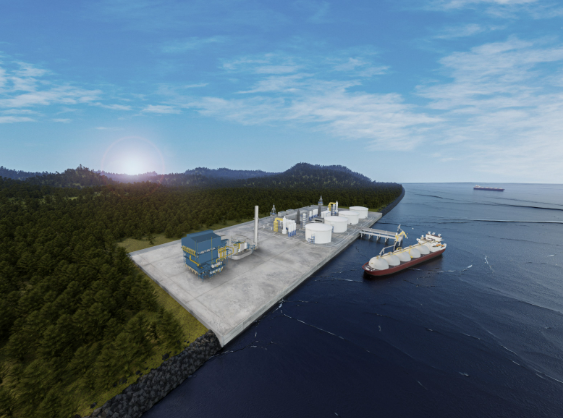
To advance commercial readiness, BASF and ExxonMobil plan to build a demonstration plant at ExxonMobil’s Baytown Complex. The facility will produce up to 2,000 tons of low-carbon hydrogen and 6,000 tons of solid carbon annually, serving as a critical step to validate the technology at scale and assess its industrial viability.
The partnership highlights a competitive approach to low-emission hydrogen production, combining BASF’s long-term innovation and reactor design with ExxonMobil’s scale-up capabilities, aiming to provide economically viable solutions for industrial energy needs while supporting broader decarbonization efforts.