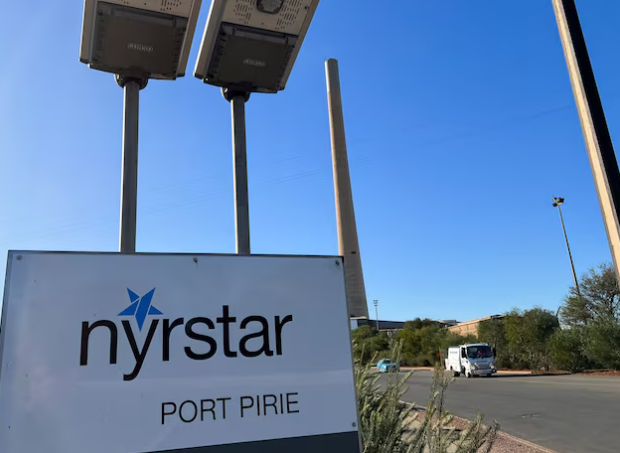
A vehicle moves near the entrance of Trafigura's Nyrstar lead smelting operations in Port Pirie, north of Adelaide, in South Australia, July 4, 2022.
The milestone follows an A$135 million ($87 million) co-investment by the South Australian and Australian federal governments in August. The funding supports Australia’s national strategy to establish itself as a reliable supplier of critical minerals to allied nations.
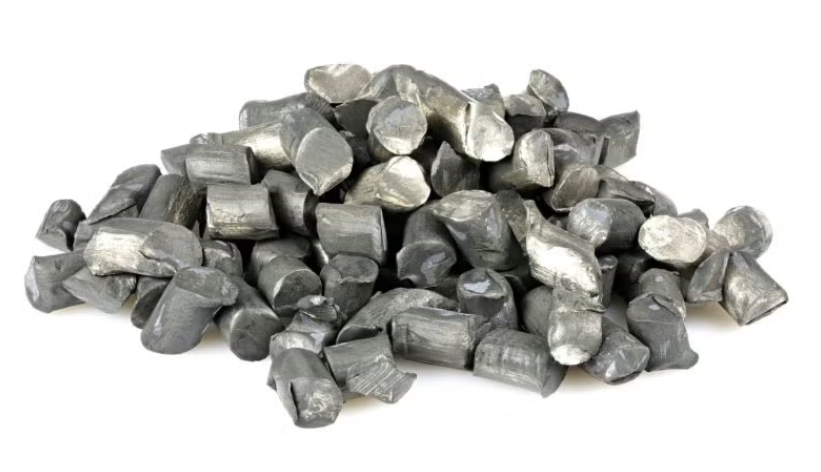
Antimony is a vital alloy hardener used to strengthen lead and other metals. It is essential for the production of semiconductors used in consumer electronics, renewable energy technologies, and defence applications.
According to the company statement, the first commercial batches of refined antimony metal are scheduled for export during the first half of 2026. Production is targeted to reach 2,000 tonnes per annum by the end of 2026, with the facility designed to scale to 5,000 tonnes per annum by 2028.
“Nyrstar’s aim is to explore possible production of not just antimony, but bismuth, tellurium, germanium and indium – minerals critical to the clean energy future and important defence and technology sectors,” South Australian Premier Peter Malinauskas said in a separate statement.
The development comes one month after Australia and the United States formalised an agreement in October to expand cooperation in critical minerals required for advanced industries ranging from artificial intelligence to defence systems.
On Wednesday, Australia’s Trade Minister noted growing international interest in the nation’s strategic critical minerals reserve, particularly from the European Union and other partners, since the signing of the U.S. compact.
The Port Pirie project positions Australia to contribute meaningfully to diversified global supply chains for materials that are currently concentrated in a small number of producing countries. With the pilot phase now operational, Nyrstar is advancing toward sustained commercial output of high-purity antimony and potentially additional critical metals in the coming years.