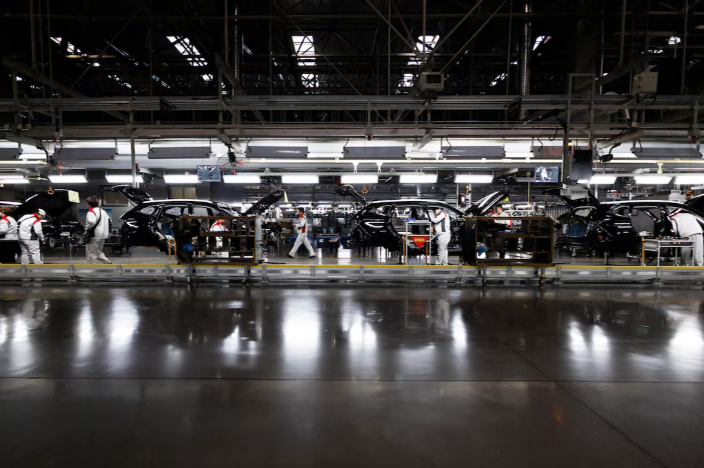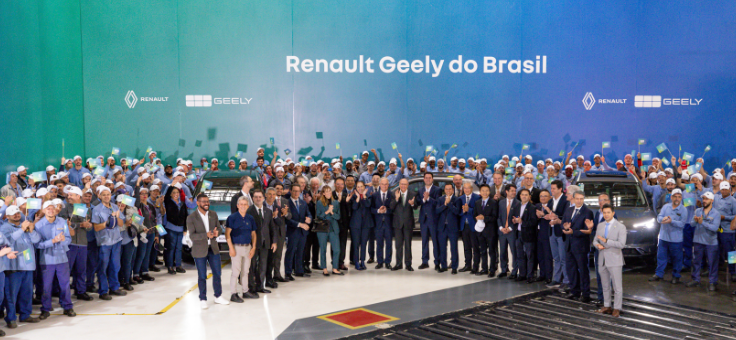
The partnership will invest 3.8 billion Brazilian reais (approximately 5.1 billion yuan) to introduce localized production of advanced new energy vehicles. The investment is expected to substantially increase capacity utilization at the existing manufacturing site and strengthen both companies’ positions in the rapidly growing Latin American market.
Under the agreed roadmap, the joint venture will begin local assembly of two Geely models based on the GEA dedicated electric architecture, with commercial launches planned for the second half of 2026. A new Renault-developed model built on a jointly created NEV platform is scheduled to enter production in 2027.
The collaboration combines Renault’s established manufacturing facilities and extensive dealer network in Brazil with Geely’s latest electric powertrain and vehicle technologies. Early market success has already been achieved through the introduction of Geely’s EX5 and EX2 (Xingyuan) models via Renault sales channels.
Future phases will focus on building a comprehensive local ecosystem, including component supply chains, research and development capabilities, and expanded after-sales support, to ensure sustainable long-term growth.
The Brazil project represents the latest milestone in the expanding strategic alliance between Geely and Renault. Previous initiatives include joint vehicle production in South Korea and the creation of HORSE Powertrain, a global powertrain technology company.
By pooling manufacturing experience and technological expertise, the partners aim to accelerate the availability of competitive new energy vehicles for Brazilian consumers while establishing a robust platform for further expansion across Latin America.
Production preparations at the Ayrton Senna complex are now underway, with facility upgrades and workforce training programs commencing to support the upcoming model launches.
The joint venture positions Renault Geely do Brasil to meet rising demand for electrified vehicles in one of the region’s largest automotive markets, contributing to the ongoing transformation of transportation throughout South America.