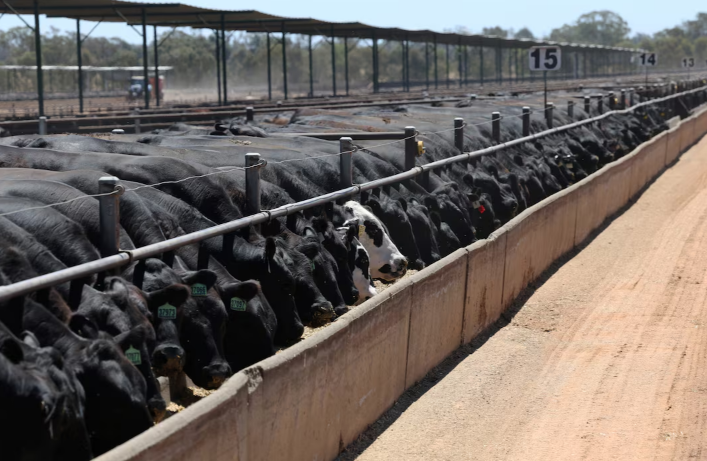
Cattle feed at Gundamain Feedlot in Eugowra, Australia, November 18, 2025.
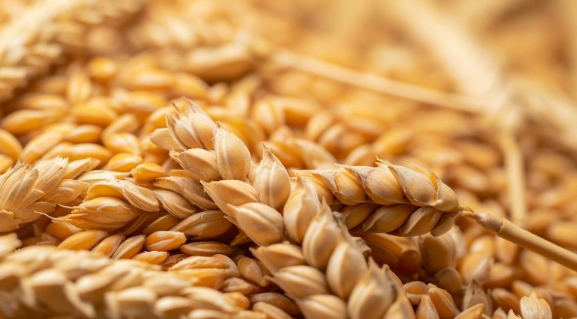
At Gundamain feedlot, located four hours west of Sydney, 6,000 Black Angus cattle are currently being finished on a diet of rolled barley, silage, cottonseed, and molasses. After an average of 90 days, the animals gain up to 50% in body weight, reaching around 600 kg, producing the heavily marbled meat preferred by many international customers.
Tess Herbert, whose family owns Gundamain, says the facility will double capacity to 12,000 head in the coming years. “We're constantly being asked for product,” she explained. “If our supply chain is asking, we're going to address that. And the only way to do so is by expanding.”
Nationwide, the number of cattle in feedlots reached a record 1.6 million by the end of June, up from 1 million five years earlier. Industry forecasts suggest the figure will approach 2 million by 2027, meaning roughly half of all cattle processed in Australia will spend time in feedlots, compared with around 40% today.
The expansion comes as the United States, long the dominant supplier of grain-fed beef, experiences lower herd numbers following years of dry conditions. U.S. feedlot numbers stood at 11.7 million head on November 1, the lowest in decades, and domestic beef production is expected to fall this year and next.
"An acceleration in demand has driven the growth," said Grant Garey, president of the Australian Lot Feeders' Association and manager for major processor Teys Australia. "Reduced production from the U.S. is definitely playing a role in that."
Australian grain-fed beef exports rose to 324,421 tonnes in the first nine months of this year, a significant increase from 224,230 tonnes in the same period of 2020. Key markets include Japan, South Korea, and China, where consumers value consistent marbling and tenderness.
Feedlots also help smooth out supply fluctuations caused by Australia's variable climate. "It gives you security over your supply chain," noted Matt Dalgleish, analyst at Episode 3. "To be able to deliver consistent output through the year and not rely on rainfall and grass – that's really important."
With strong margins and steady international orders, further growth appears certain. Analyst Simon Quilty of Global AgriTrends predicts the sector will reach 1.75 million cattle on feed next year before climbing to 2 million the following year.
"Operators are seeing the opportunities," Quilty said. The continued rise of Australia' s feedlot sector is positioning the country to capture a larger share of the global premium beef market while offering customers reliable, year-round supply of grain-finished product.