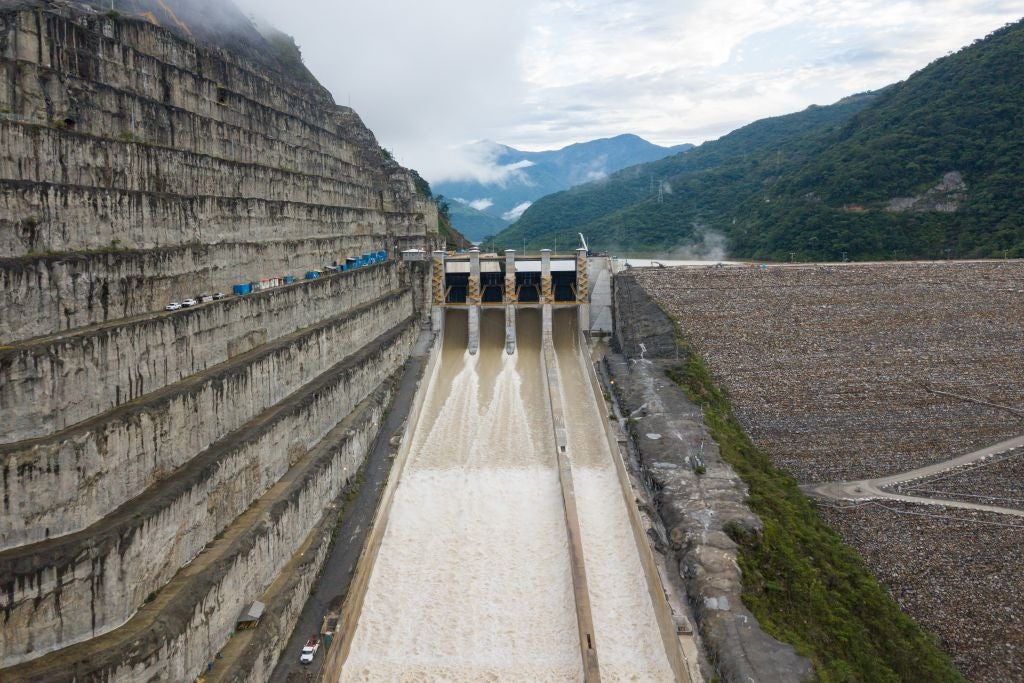
But, like all power sources, there are challenges associated with hydropower. Land use, displacement of communities, and biodiversity loss pose major social risks for hydro, while climate change threatens the twin extremes of severe storms – overwhelming dams – and extended periods of drought. In many places too, like the US and Canada, 1960s-era dams and hydropower stations need to be modernised and made more efficient.
The threats posed by climate change are already being felt. In western Canada, utility BC Hydro faced the hottest summer on record in 2021, resulting in severe drought, and fragile soil and trees, which in turn caused problems for the wet and wild autumn and winter. “We also broke more electricity demand records in 2021 than any other year,” says a spokesman for BC Hydro. “That can be tied to [British Columbia] experiencing extreme temperatures in both summer and winter that lasted for long periods of time.”
He adds: “We have seen a 117% increase in storms […] over the past several years.”
The power of hydro
Hydropower projects can, to a certain extent, help manage excessive precipitation and increased flooding. “[Dams] can provide climate adaption benefits, as well as being at risk of climate change,” says Alex Campbell, head of research and policy at the London-based International Hydropower Association (IHA). “Flood control or drought management are obvious multi-purpose benefits from dams.”
“One of our big suggestions to governments is to start planning for their net-zero systems now,” Campbell says. “By all means, build lots and lots of wind and solar, that’s a very sensible thing to do in many markets … But when it’s not windy or sunny, you still need electricity, so how do you keep the lights on in a low-carbon way? Hydropower is supremely well-placed for that.” Unlike wind and solar, hydropower is a dispatchable power source that can provide baseload power.
He adds that the IEA and International Renewable Energy Agency (IRENA) have both concluded that hydropower “will be the dominant source of flexible generation” in a net-zero power system, playing a role in both generation and storage.
“We think it’s really important that governments get their heads around the need for that,” Campbell says, citing places like the UK which are already looking at options for long-duration energy storage. “Hydropower is just one technology that can work in that space, but it’s certainly the most mature today.”
An additional 1,300GW of hydro capacity is needed to limit the average global temperature rise to 1.5?C, according to the IEA, while Campbell notes IRENA estimates pumped hydro needs to add another 400GW of storage capacity on top of the current 160GW. “China alone has announced plans for around 120GW of pumped hydropower by the early 2030s, up from their 30GW today,” he says. “It wouldn’t surprise me if that 400GW figure was increased in future iterations of the modelling.”
Gas vs hydro
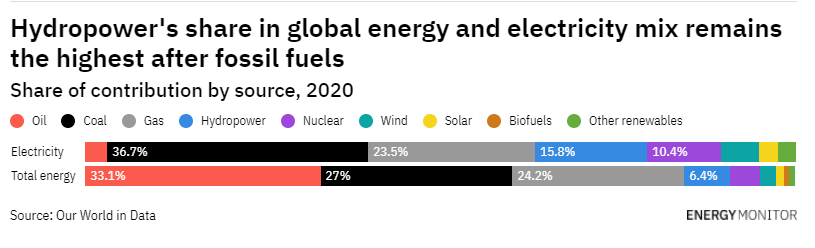
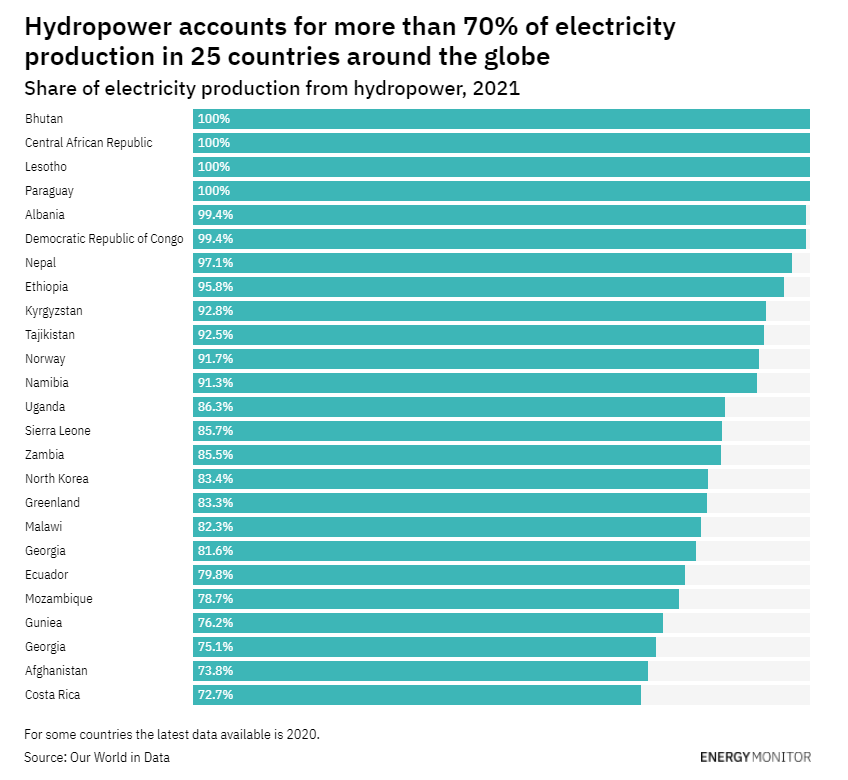
However, Sydney-based director of Climate Energy Finance, Tim Buckley, sees a small but important role for gas for the next 10 or 20 years, to provide that flexibility to meet peak demand. Buckley has been working on New Zealand’s electricity system for the past year, which is already dominated by renewables – averaging 82% last year, including 56% from hydropower – and which Prime Minister Jacinda Ardern pledged during the 2020 election campaign will be 100% renewable by 2030.
“Jacinda Ardern is trying to take a global leadership role, but when you look at the practicality of being so reliant on hydro, it’s opened my eyes to the enormous problems that that entails because of the risk of drought,” Buckley says.
“I’m not an advocate for gas power plants, but at the end of the day, if you’re talking about a rapid decarbonisation of the electricity grid, it’s how you deal with that extreme outlier [event],” Buckley continues, like a years-long drought similar to that experienced in Brazil, which is also dependent on hydropower. “A gas-peaker plant allows you to deal with that,” he says, particularly if it can be built to be hydrogen-ready.
“The last couple percent of decarbonisation is extremely difficult and expensive,” Buckley adds. “So the cost to the average New Zealander of going 95% green is pretty low, [but] the cost of going that final 5% is disproportionately high.”
One solution proposed by the New Zealand government is to use Lake Onslow as a pumped hydro storage facility, which it estimates could provide capacity of at least 5TWh of generation and/or storage each year. Utilities, however, are objecting to the plans “because you’re proposing a hydro solution to a hydro problem”, says Buckley. Instead, the sector is calling for measures such as demand-response management and industrial process changes to increase flexibility.
Adding gas-fired power generation to ensure security of supply is one route being taken in South America, which as a continent is blessed with plenty of water and generated 642TWh of electricity from hydropower in 2019 – or 81% of all renewable generation in the region, led by Brazil and Colombia, according to IRENA.
“What I have seen in Latin America is a transition to investing in gas-fuelled generation,” says Roxana Munoz, an assistant vice-president analyst for Latin America at credit ratings agency Moody’s in Mexico City.
Colombia’s share of hydropower – at 72% – is set to be boosted by a further 17% when construction ends on local utility EPM’s 2.4GW Ituango hydroelectric plant. “[But] Colombia is [also] trying to increase generation by gas to avoid any [potential] disruption [to power supplies]”, Munoz adds.
The same is happening in Mexico, she says, where hydropower accounts for 80% of renewable generation, but only 9% of overall electricity supply – and where investment in new renewables has stalled. “The dependence in Mexico is more towards natural gas,” Munoz says, despite efforts to increase hydro capacity.
Brazil seems to buck the trend, with Munoz noting that the country is working to increase its share of wind and solar power. Colombia too is trying to increase its share of clean energy, and held its first renewable energy auction in February in a bid to diversify its renewable assets.
“Renewable diversification reduces the likelihood of price hikes from climate impact, such as during El Niño or La Niña weather events that affect hydro generation,” wrote analysts from Moody’s in a research note in January 2022.
The analysts estimate that the share of non-hydro renewables in Colombia could reach 15% by 2025 – up significantly from 1% in 2018, but lagging other countries in the region.
Hydro in a cold climate
Further north in Canada, Hydro-Quebec has been thinking about climate adaptation since a severe ice storm in 1998 left millions without power for up to five weeks. It prompted the firm to sponsor the creation of climate change research consortium Ouranos. “One of the central questions of this research pertained to hydrology,” says Jean-Philippe Martin, a climate change adaptation adviser at the Montreal-based utility.
In 2019, Hydro-Quebec created a company-wide climate change adaptation plan, performing a risk assessment for each aspect of the business and identifying actions to mitigate those risks. It is starting to integrate adaptation into its projects, such as factoring in climate change to hydrological assessments when conducting dam refurbishments.
Research on ice storms, and how their frequency and magnitude could be affected by climate change, has also led to changes in design criteria for power lines, Martin says. And frequent inspections – mandated by law – allow for regular updates to design specifications, such as dam heights and spillways.
Unlike other parts of the world, diversifying to other renewables to shore up the hydroelectric fleet will only go so far in the province. Hydro-Quebec last year built its first two solar power plants, with a capacity of 9.5 megawatts (MW), but spokesman Francis Labbé notes: “Quebec doesn’t have the same level of sun as, for example, Arizona.” In the next few years, the firm will add 3,000MW of wind power to help meet rising electricity demand, as well as update existing hydro plants.
Modernisation and refurbishment of existing infrastructure is vital to maximise the potential of hydropower, particularly as new projects can take 10 to 15 years to build. “Modernisation is critical for the hydropower fleet globally,” says Campbell from the IHA. “Quite a lot of the assets are now quite old – around 50%, 600GW, is now 30 years or older, and something like 400GW, or around a third of the fleet, is 40 years or older.”
“You can usually increase your generation … by about 5–10% with a basic modernisation programme,” he adds.
The IHA, with support from the World Bank and European Bank for Reconstruction and Development, has prepared a Climate Resilience Guide to help developers and engineers assess and minimise climate risks for both new projects and modernisations.
New-build challenges
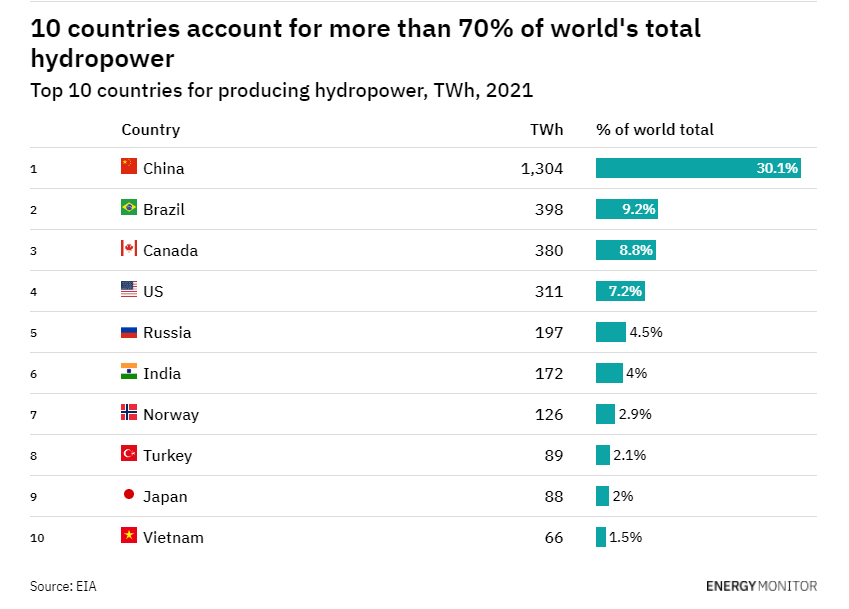
Despite these efforts at sustainability, trouble persists with new builds in some places, such as India. With its 46.5GW of installed hydropower capacity, accounting for nearly 12% of its electricity mix, India is one of the largest hydroelectricity producers in the world, and has a further 91GW planned, according to GlobalData. However, geography, poor infrastructure and extreme weather patterns have been challenging.
Buckley explains that the main purpose of hydropower projects in India is to help manage flooding – but that is problematic during monsoon season. “When the monsoons come, you’ve got no choice, you have to release the rain,” he says. But monsoons also wash sediment and debris into water flows, which can put pressure on dam walls if they are not dredged regularly – not to mention methane emissions from rotting biological matter.
“The idea that hydro is clean makes sense in New Zealand – it does not make as much sense in India, particularly if you’re not doing maintenance,” Buckley says. “You’ve got to dredge dams every year, and obviously a country as poor as India can’t always afford to do the dredging, so not only does the capacity progressively decline but the methane goes up over time.”
And if building dams in areas prone to seismic activity, this can lead to an increase in such activity, Buckley adds, which risks flooding and destroying villages downstream. The controversial Three Gorges Dam in China is reported to already have cracks, he says. “I’m not an engineer, but in India, where they’re not as technologically advanced as China and money is really problematic, if they cut corners, the risk of structural damage is heightened.”
“Building new hydropower generation projects is expensive and challenging,” sums up Munoz. “You have environmental risks and you have social risks.” Colombia’s Ituango project was delayed by landslides in 2018, leading to cost overruns and fines for delayed start, and had to move communities to build the project.
“These types of projects are not easy projects,” she adds.
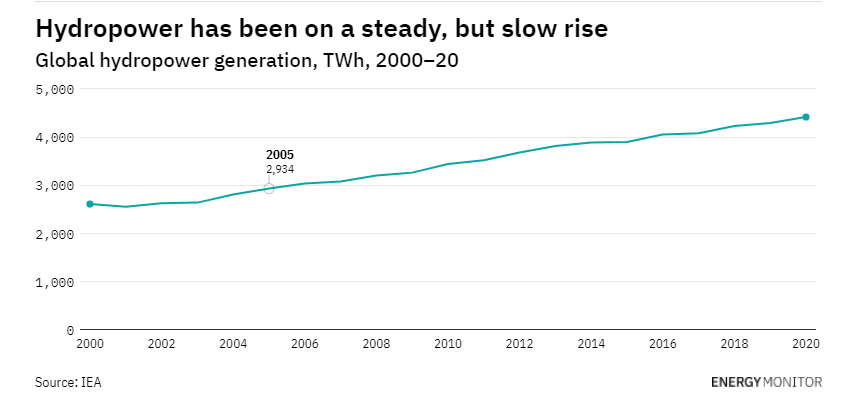
But they are projects which are needed if the world is serious about averting the worst effects of climate change. And, according to the IEA, only around half of the world’s economically viable hydropower capacity has been tapped, leaving the technology ripe for investment.