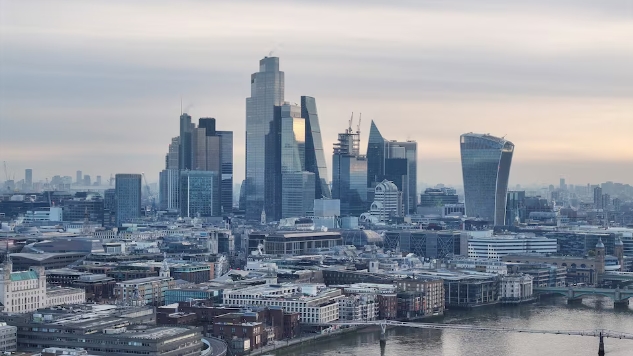
These rules are adding extra costs to projects and sometimes require using relatively unproven technologies. And the rapidly shifting scientific, regulatory, and technological landscapes mean that even the most forward-thinking projects can soon be rendered obsolete, which is what happened with One Vanderbilt, a skyscraper near Grand Central Station. The project, intended to be an environmental showpiece, faced potential retrofitting of its innovative green heating-power system by the time it opened in 2021 because of newly adopted city climate regulations.
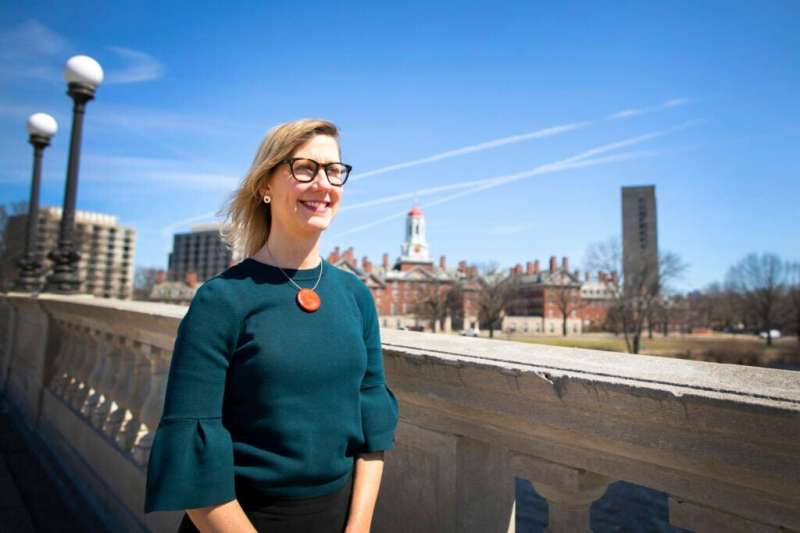
Holly Samuelson, M.Des. '09, D.Des. '13, is an associate professor of architecture at the Harvard Graduate School of Design who focuses on architectural technology and how issues related to building design impact human and environmental health. She spoke to the Gazette about how the field is responding to all the rapid changes. The interview has been edited for clarity and length.
GAZETTE: There has been growing recognition that the effects of climate change are happening sooner and could be more extreme than anticipated. Has that changed the way projects are planned, designed, and built?
Samuelson: I've seen increasing focus, investment, and expertise related to climate change. I think we're going to see the pace accelerate going forward. I'm particularly interested in the new laws on existing buildings. In New York City, that's local law 97. In Boston, that's BERDO 2.0 [Building Emissions Reduction and Disclosure Ordinance] and will be BEUDO 2.0 [Building Energy Use and Disclosure Ordinance] in Cambridge. These are among the first wave of laws targeting existing buildings.
In Boston, BERDO 2.0 will require existing buildings of a certain size to be net zero greenhouse gas emissions by 2050. That's causing a stir because for the first time, existing buildings can't simply remain energy hogs with no penalty. And for new buildings, it's changing decisions. Design teams and owners are realizing that their new buildings will become existing buildings and be regulated by these laws.
GAZETTE: What aspects of climate change are consuming the most attention?
Samuelson: Much of the focus has been and is on operational energy performance or bringing down the energy use of buildings. Two things are happening rapidly. First, there's an increase in interest in lifecycle carbon emissions, meaning that you think about the greenhouse gas emissions that came from not only operating the building, but also from manufacturing and constructing [it], from extraction to demolition, etc.
Traditionally, buildings were such energy hogs when they were running that we could kind of ignore the carbon emissions that went into building the buildings because they were such a small slice of the pie. But now we're shrinking the rest of the pie in terms of operational emissions, and we're greening our grids, so the relative importance of the embodied emissions is growing.
Another trend we're going to see—we're not there yet—is considering the timing of energy use in buildings and how it impacts greenhouse gas emissions. If we really are going to green our grids, we're probably going to see more and more intermittent renewables, like wind and solar, which produce power at certain times. There are different ways of aligning supply and demand. One way is to adjust the timing of our demand in buildings. So, we're starting to think more and more about that.
Samuelson: Well, it can be expensive to not design for resilience. We've seen on the news people dying from indoor conditions during heat events, power outages, cold spells, hurricanes, etc. And on the commercial building side, we know that a business taken offline can be very expensive.
Although technology is changing, many of the strategies to make our buildings more resilient and to shrink their carbon footprints are well-known and well-tested. For example, using better window systems, often using less glass area so that more wall area can be well-insulated, using proper window shading. The importance of these fundamental strategies is increasing.
When designing for climate resilience, I think of basic strategies like moving expensive equipment from basements to higher floors if you're in a floodplain, designing for hurricane-resistant envelopes, or putting in operable windows and insulation to mitigate against heat and cold extremes and power outages. These are not unknown technologies.
If you're trying to do a cost-benefit analysis, it's difficult to know the probability that some extreme event is going to hit your building. And you're right: We have a problem with long-term data because things are changing so quickly that, in some cases, the long-term data may not be adequate anymore. So, while there can be uncertainty about the future, in some ways, our path is becoming clearer.
GAZETTE: One Vanderbilt incorporated costly, cutting-edge energy technology, and made specific choices around resiliency. By the time the building opened in 2021, new city regulations rendered the technology outdated. Is this kind of thing happening frequently?
Samuelson: One Vanderbilt—that's an interesting example. They put in a system that burns "natural" gas on site to make both heat and electricity simultaneously, which is generally more efficient than burning gas at the building for heat while also burning fossil fuel at the power plant, wasting most of the heat, and then bringing the electricity to the building. According to the Energy Information Administration, on average in the U.S. in 2019, more than 60 percent of energy was lost going from the power plant to the building. So, One Vanderbilt's system was considered a step forward from the prevailing technology at the time.
What happened since the planning of One Vanderbilt is the New York City law regulating certain existing buildings, with carbon caps becoming much more stringent over time. According to the EPA power profiler, in 2021 the city's electricity was generated from about 90 percent gas, just under 9 percent nuclear, and most of the rest from fossil fuels, with the expectation of future decarbonization. At the same time, if you heat the building with a heat pump, which is the trend we're moving toward today, each unit of electricity can "pump" more than one unit of heat into the building. But once a building has gas infrastructure, it's going to be expensive to replace that with electric systems later.
Another thing about that building is that less glass would use less energy since glass is the worst thermal performer in the envelope. That was likely known at the time and probably other priorities prevailed. So, while we can't know the future of building regulations, maybe that's a lesson to all of us: There's a trend toward more stringent regulations. So, we may need to calibrate our priorities.
GAZETTE: You mentioned that the rapidly changing regulatory environment is exciting and a positive development, but does it make it more challenging to design and plan projects because you're making decisions based on existing conditions and but also perhaps want to anticipate what may be coming so you're not caught flat-footed if something changes in the middle of a project?
Samuelson: In Boston, I've heard of new building projects where their future anticipated BERDO 2.0 requirements have tipped the balance in favor of electrifying the building, for example, because they know that by 2050, they will have to be at net zero, so they want to be poised to take advantage of the greening of the grid. Whereas, if you put in a gas system, you're somewhat locked into using that, and it's not going to get cleaner as the grid changes.
These kinds of laws have been spreading to other cities. So, if another major metropolitan area in the U.S. does not yet have these kinds of laws, and I were an architect or a developer in those cities, I would have in mind that there's a good possibility that these will come, and we should be prepared for them.
I think you make the best decisions possible with the information that's available. No one has a crystal ball. That's how Harvard as a university can help, because we're able to look farther ahead than what design teams have the capability to spend time on right now, and we can say, "Here's what we think is coming, and here's what we think is going to be important if we look farther down the road." So, the best we can do is to arm decision-makers with the best information possible about the anticipated future.