At first blush, Texas holds the best position in the U.S. to lead in carbon capture and storage. It boasts vast underground formations suitable for storing CO2, and its proximity to major anthropogenic carbon sources – drilling, refining, chemicals and other energy-intensive industries – means it needs fewer miles of pipelines and other transport vessels to get the carbon from production source to storage.
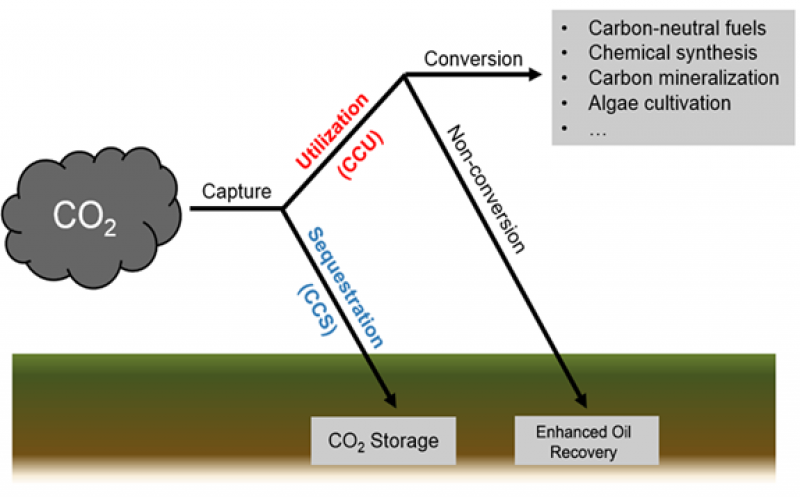
Additionally, Texas has long been home to a large number of U.S. oil and gas companies with the technical and industrial know-how to tackle the hurdles of capturing, transporting and storing a gas thousands of feet underground. These advantages will play an important part in the global dialogue over the best ways to explore carbon sequestration options. The U.S. Energy Information Administration and the International Energy Agency, for example, have identified carbon capture, utilization and storage, or CCUS, as having the potential to play a critical role in reducing global CO2 emissions, and Congress recently expanded a tax credit intended to spur more sequestration projects.
1.Permitting for Class VI Wells
Texans have long relied on injections of CO2 to enhance oil production and temporarily store gas for future use. Getting permits for those injection wells, however, is a bit of a welter. If operators inject CO2 to wring more oil from a depleted or balky field, they must first obtain a Class II well permit from the Texas Railroad Commission. If their well injects that CO2 into state lands (including coastal or offshore formations), the General Land Office must approve the operation. And if the operators simply want to permanently store or sequester the CO2 underground, they need an entirely separate permit for a Class VI well from the U.S. Environmental Protection Agency through a different set of federal regulations under the Safe Drinking Water Act.
The blurry lines between these types of wells, including wells that start in one role and move to another, creates a tricky regulatory regime that forces operators to navigate in stop-step fashion. Texas can substantially clear up the permitting pathway by simply applying to take over the authority from EPA to issue permits for Class VI wells in the state. The Safe Drinking Water Act allows states to shoulder permitting programs if they meet certain minimum requirements, but the federal law doesn’t set out any mandates or deadlines to complete this process. While North Dakota has taken primacy to run its own Class VI well permit program (and Louisiana and Wyoming have applied for delegation of their programs), Texas has not yet submitted an official request to take over its Class VI program.
In Texas, the Railroad Commission and the Texas Commission of Environmental Quality (TCEQ) divide statutory authority over most CO2 injection wells. Both of these agencies therefore would need to work together to apply for delegation (even if one agency simply cedes authority to the other). The Texas Legislature can help spur movement here by clearly designating one agency as the primary permitting venue for all CO2 injection wells, setting deadlines to request that EPA delegate the Class VI program to Texas and providing the necessary funding to get the job done.
2.Classification of CO2 as waste, rather than a beneficial product
Many states, including Texas, allow pipeline operators to condemn land only when their pipeline serves a public use. In other words, when courts determine if a pipeline is a “common carrier,” they look to whether the project in question will benefit the general public. For example, a pipeline company transporting natural gas for reasons other than the company’s own consumption is generally seen as a common carrier because that gas reaches third parties and the natural gas is seen as a beneficial product.
In return, a pipeline company designated as a common carrier has the power of eminent domain to expropriate property for public use. It has to compensate property owners for their lost land, but the company’s path to build the pipeline is usually much easier.
But that process has become more complicated for pipeline companies dealing with CO2 sequestration in Texas. Before carbon capture and sequestration can become a recognized industry in the state, additional pipelines will have to be built to transport anthropogenic CO2 between the source – a production facility, for example – and the storage facility. Federal environmental regulations, however, can classify some forms of CO2 destined for permanent sequestration as an air pollutant or as a solid waste (when sealed in a container), and therefore pipelines that transfer such “waste” for disposal may not offer a direct benefit to the public that satisfies traditional justifications for condemnation authority. Due to this classification, the Texas Supreme Court ruled in 2012 that some private landowners could challenge a CO2 pipeline owner’s self-designation as a common carrier, and the court allowed them to bring their claim even after the agency had issued the permit.
3.Liability for Future Releases of Sequestered CO2
Texas currently does not cap civil liability for non-economic losses that arise from mishaps or failures at carbon capture and sequestration operations. Texas law also does not allow the state to take over any perpetual long-tail liabilities after the carbon facility is closed.
As a result, a facility operator may face the risk of liability in the far-flung future if a sequestration facility fails and releases its CO2 back into the atmosphere, or if captured CO2 in the closed facility causes unexpected damage (e.g., seismic disturbances or risks to future unanticipated uses of nearby land and resources). Liability caps and risk-shifting to states would allow operators to determine their true exposure to future liability from closed facilities. In turn, this additional certainty would help them obtain the financial assurances they need to safely operate.
Other states, including Louisiana and North Dakota, have already adopted liability caps or set out a pathway for the state to assume any long-term liability for a closed CO2 sequestration facility. A similar approach, with proper oversight and rigorous transparency, could greatly increase the viability of carbon capture and storage in Texas.
4.Lack of Unitization Legislation
When one large pool of oil lies under multiple pieces of property, the neighboring owners tend to squabble over extraction and drilling arrangements. To solve this problem, Texas allows an operator to “unitize” the formation by aggregating the property owners’ rights into one unit. That’s helpful for oil and gas producers because it allows them to operate and manage the reservoir as a single unit. When done well, unitization can improve production efficiency, avoid fractious property spats and assure that each owner receives their due royalties. And in all of the states with major oil and gas operations - except for Texas - unitization becomes compulsory once a certain percentage of landowners agrees to unitize. Property owners forced to participate in a unitization still maintain their rights and receive their share of the benefits, but they also have to share in the operation expenses.
When we move to CO2 sequestration, however, the Texas regulatory stance on unitization gets blurry. While Texas law allows unitization for enhanced oil recovery (including the use of CO2 through Class II wells), it lacks any specific provisions for geological storage of CO2 solely for sequestration or disposal. Compulsory unitization for CO2 sequestration operations could allow operators to negotiate a single agreement to a sequestration facility and its associated geologic storage formation rather than hammering out individual operating contracts with each landowner. Both specific legislation for compulsory unitization and for Class VI well unitization would help to expedite the expansion of carbon capture and storage in Texas.
5.Pore Space Ownership
While Texas law leaves some ambiguities over how to authorize a CO2 sequestration facility and assure its safe operation, it also leaves open a rather fundamental question: who owns the spaces in the rock that actually contain the CO2? While a surface owner can sell her separate rights to oil and gas under their property to the mineral estate purchaser, that oil and gas doesn’t necessarily include the spaces in the rock remaining after the oil and gas is extracted.
In Texas, conflicting court decisions have left it unclear who would need to be approached to obtain underground storage rights to open a carbon storage facility in Texas. One Texas Supreme Court case, Mapco v. Carter, awarded the mineral estate with the ownership right to underground formations (which presumably includes pore spaces). This decision, however, may conflict with a prior U.S. Court of Claims decision, Emeny v. United States, which held the surface estate owns associated underground formations, although that ownership right must bow to right of reasonable use by any productive oil and gas lessee. Other cases have tackled varying scenarios (including the use of salt domes created by production operations), but no subsequent Texas court case or legislation has indisputably resolved the issue. As a result, operators of CO2 sequestration facilities may find themselves negotiating with both mineral estate and surface owners to obtain clear title to the property needed to permanently store the gas.