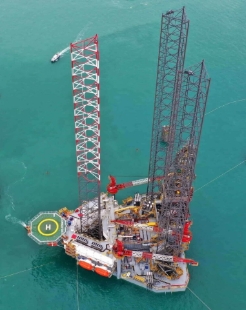
Valaris 123, former Ensco 123, jack-up rig
Post-drilling analysis confirmed a gas column of approximately 100 meters, with core samples from the Leman B-Sand showing better-than-expected porosity and permeability. These findings led Deltic to update its subsurface model, resulting in higher gas-initially-in-place estimates, improved recovery rates, and extended production periods. Deltic now projects gross 2C contingent resources of 174 billion cubic feet, a 33% increase from prior estimates.
Andrew Nunn, Deltic’s CEO, stated: “The six month post discovery checkpoint is always a key stage gate on the path from a gas discovery to a gas development project, and as the technical work gathers momentum we narrow the inherent uncertainties of a new find and get greater clarity on the discovery and its potential. The integration of the core data into the volumetric and economic analysis has led to a significant refinement and improvement in Deltic’s understanding of the Selene asset which continues to impress.”
The joint venture partners, with Shell as the operator and Deltic holding a 25% non-operated interest, have committed to the second term of the license. They are advancing engineering, commercial, and regulatory processes to support a field development plan and a final investment decision expected in early 2027. The project envisions a two-well development tied to existing infrastructure on the Barque field via a 20-kilometer subsea pipeline.
Gas samples from the 48/8b-3Z well indicate methane-dominated natural gas with minimal contaminants, requiring little processing to meet National Grid standards. Nunn added: “We believe that it has never been more important for the UK to develop and maximise the benefit of its own resources, like Selene, and thereby maximising the proportion of ‘good barrels’ in the mix as we become increasingly dependent on imported oil and gas.” The updated economic model reflects a 45% increase in the project’s net present value for Deltic, supporting its commercial viability.