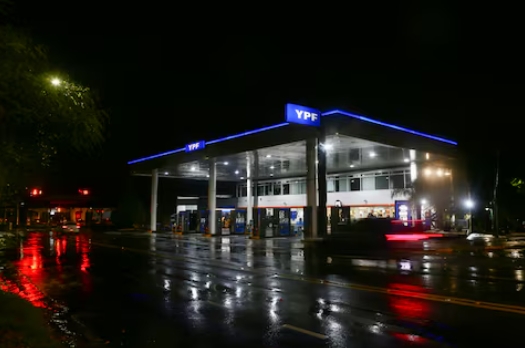
Cars drive past a gas station of Argentina's state energy company YPF, in Buenos Aires, Argentina February 10, 2021.
Marin explained: “The time frames are much faster than on a land-based plant, and they’re all turnkey projects so you know exactly what they will cost.” This approach offers faster implementation and predictable costs, making floating vessels a practical choice for YPF’s LNG ambitions.
YPF is spearheading development in the Vaca Muerta formation, a vast shale region in Argentina comparable in size to Belgium. This area holds the world’s second-largest shale gas reserves and fourth-largest shale oil reserves, positioning it as a key asset for the country’s energy sector.
As part of the Southern Energy Project, YPF, in collaboration with other oil companies, plans to launch Argentina’s first liquefaction vessel by 2027, with a capacity of 11.5 million cubic meters per day. A second vessel is scheduled to be added in 2028, further expanding the country’s LNG export capabilities.
YPF has also secured partnerships to support its LNG initiatives. The company signed an agreement with Shell, enabling the global oil major to contribute to LNG production, liquefaction, and sales. Additionally, YPF entered a memorandum of understanding with Italy’s Eni to develop upstream LNG facilities, including transportation to two floating liquefaction units with a combined capacity of approximately 6 million metric tons per year.
These collaborations and the shift to floating vessels reflect YPF’s focus on efficient and scalable solutions to tap into global LNG markets. By leveraging Vaca Muerta’s substantial reserves and strategic partnerships, YPF aims to establish Argentina as a significant player in the international energy trade while optimizing project timelines and costs.