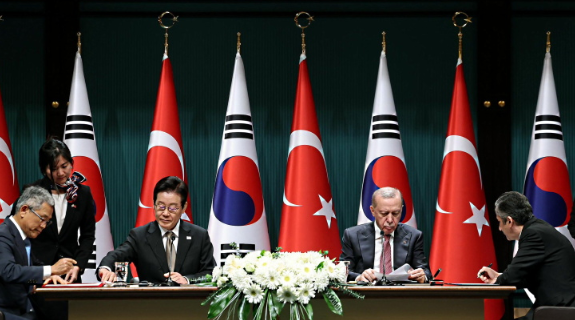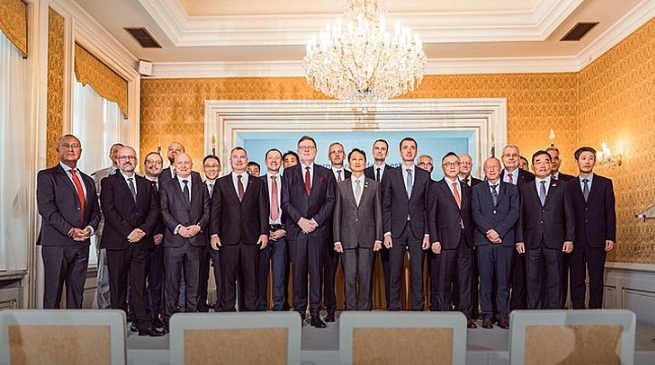
Czech Minister of Trade and Industry Lukas Vlcek stated: “At this point, it is important that we do everything we can to continue immediately after the court’s decision. That is why a number of commercial agreements and cooperation agreements between KHNP and other members of the Korean team were signed today.” The contracts involve Czech firms such as Škoda Power, Škoda JS, ÚJV ?e?, Metrostav DIZ, ZAT, OSC, I&C Energo, NUVIA, and the Association of Construction Entrepreneurs, ensuring 30% Czech industry participation initially, with a target of 60% by project completion.
The agreements include a framework for supplying a turbine hall and a steam turbine contract between Škoda Power, KHNP, and Doosan. CEZ, the operator of Dukovany, emphasized the project’s importance, stating: “The construction of new nuclear units in Dukovany is a crucial project for Czech energy security and self-sufficiency. Czech households and the Czech economy must be sure that there will be enough energy available at affordable prices to maintain quality of life, prosperity and the competitiveness of Czech industry.”
The Dukovany project is part of the Czech Republic’s energy strategy, with the country currently relying on four VVER-440 units at Dukovany and two VVER-1000 units at Temelín for about one-third of its electricity. In July, Prime Minister Petr Fiala announced KHNP as the preferred bidder for up to four new units, citing its competitive offer of approximately CZK200 billion ($8.6 billion) per unit for two units. The target is to begin test operations for the first new unit by 2036, with commercial operation in 2038.
Despite the legal challenge, the Czech government remains committed to the project. Last week, the state increased its stake in the Elektrárna Dukovany II project to 80%, valued at CZK3.6 billion ($163 million), with CEZ retaining 20%. The agreements reflect strong collaboration between South Korean and Czech industries to enhance energy infrastructure and support sustainable economic growth.