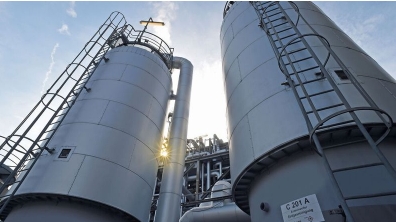
Ammonia production at Ludwigshafen site
At the Ludwigshafen Verbund site, hydrogen is sourced from both fossil fuels and renewable energy. Through a mass balance approach, hydrogen derived from renewable energy is allocated to the production of renewable ammonia grades. These grades have received ISCC+ certification and can serve as direct replacements for conventional ammonia products. They are available for bulk distribution, maintaining standard delivery methods.
The renewable ammonia grades significantly lower the product carbon footprint (PCF) compared to BASF’s other low-CO2 ammonia products. Dr. Jens Aßmann, Vice President of Business Management Ammonia Value Chain and Operations Amino Resins at BASF, stated: “Our biggest goal is net zero of our products. With our renewable ammonia, we can significantly undercut the product carbon footprint (PCF) of our other low-CO2 ammonia grades.” BASF calculates PCFs following the Together for Sustainability PCF Guideline, ensuring transparency and consistency.
Demand for low-carbon ammonia, often referred to as “green” ammonia, has been steadily growing and is projected to continue rising. Aßmann noted: “Our customers, as well as BASF’s own downstream businesses, need low-carbon products already today to explore their market.” The company’s renewable ammonia grades address this need, offering a sustainable solution for various industries. BASF highlighted that these grades mark the first renewable ammonia produced in Central Europe with a notably low PCF.
By incorporating renewable energy-derived hydrogen, BASF’s renewable ammonia grades align with the company’s commitment to sustainability and carbon reduction. The products support customers and BASF’s internal operations in meeting market demands for environmentally friendly solutions, reinforcing the company’s leadership in sustainable chemical production.