Russia plans to invest in its shipbuilding operations to expand its commercial fleet
Mishustin announced: “In the next six years, we will spend over 500 billion rubles ($6.2 billion) in federal funding for these purposes, which is a record figure for the industry.” The initiative prioritizes supporting freight transport along the Northern Sea Route, establishing logistics connections with partner countries, and promoting inland navigation and river tourism.
First Deputy Prime Minister Denis Manturov detailed the strategy, emphasizing the need to replace ships built in the 1970s and 1980s. The plan targets constructing over 1,600 vessels by 2036 and more than 2,600 by 2050, with earlier reports indicating 713 vessels by 2030. The focus includes large-capacity ships such as crude oil tankers, gas carriers, shuttle tankers, and bulk carriers. Additionally, 51 vessels are designated for the Northern Sea Route, alongside icebreakers and 279 ships for the fishing fleet. The strategy also supports the North-South route, including Caspian Sea shipping.
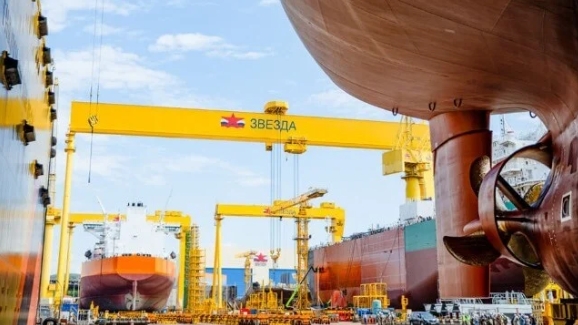
To achieve these goals, Mishustin highlighted the need for new shipyards, expanded production capacity, and research and development to attract investment. The plan addresses structural challenges within the industry to ensure sustainable growth. The government aims to balance these commercial objectives with the ongoing priority of meeting defense requirements, with a new plan in development for the Russian Navy.
The shipbuilding initiative reflects Russia’s commitment to strengthening its maritime infrastructure and fostering economic resilience. By investing in modern vessels and domestic technology, the strategy seeks to enhance freight and logistics capabilities, supporting both regional and international trade routes.
The ambitious targets underscore the importance of the shipbuilding sector in Russia’s broader economic strategy. The development of new shipyards and supply chains will create opportunities for innovation and collaboration, positioning the industry to meet future demands while maintaining high standards for quality and efficiency.