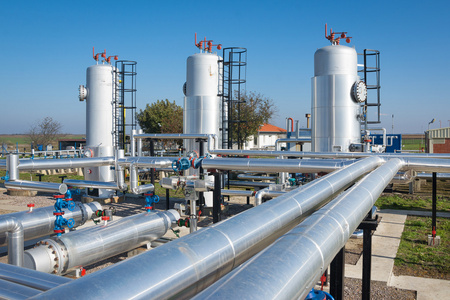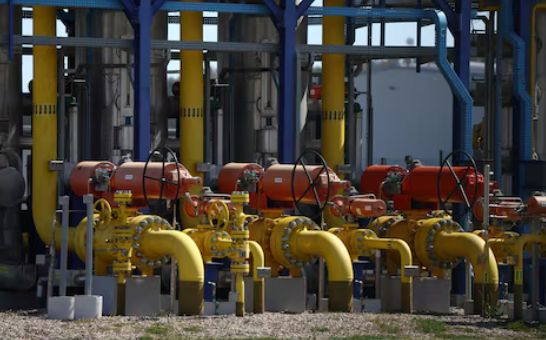
Gas pipes are seen in Baumgarten, Austria, September 28, 2022.
“It is a great surprise that the elimination of Russian gas transit via Slovakia has led to greater liquidity at the Austrian hub,” Steiner told Reuters. “We are a resilient trading and transhipment hub. The past ... months have demonstrated this.”
Established in 2005, CEGH serves as a key platform for gas trading, originally designed to handle Russian gas, including supplies from the Nord Stream pipeline, supported by Austria’s large storage facilities. Following the halt of Russian gas transit through Ukraine in January 2025, after the 2022 invasion, the hub adapted by facilitating gas imports from Norway and LNG from European ports. Austria continues to re-export gas to Slovenia, Slovakia, and Hungary, with the latter two also acting as transit points for gas to Ukraine.
From January to May 18, 2025, CEGH recorded 67.1 terawatt hours of spot gas traded, a 0.3% increase from the previous year, and 76.8 terawatt hours of gas futures, up 12%. “We can be optimistic that this liquidity improvement will continue,” Steiner said, highlighting the hub’s adaptability.
The European gas market is experiencing a rebuild in inventories, enhancing supply security. “Price margins for feed-in in summer for winter 2025/26 have turned positive since April,” Steiner noted, aligning with comments from Uniper’s CEO. Spot gas prices have dropped 24% since March, as efforts to prevent short-term stockpiling have taken effect. The summer-winter price spread, indicating potential profits, has reached up to 1 euro per megawatt hour since April, reversing a negative trend from the prior six months.
With 366 member companies, CEGH continues to play a vital role in regional energy markets, adapting to new supply dynamics and maintaining liquidity despite significant changes in gas sourcing.