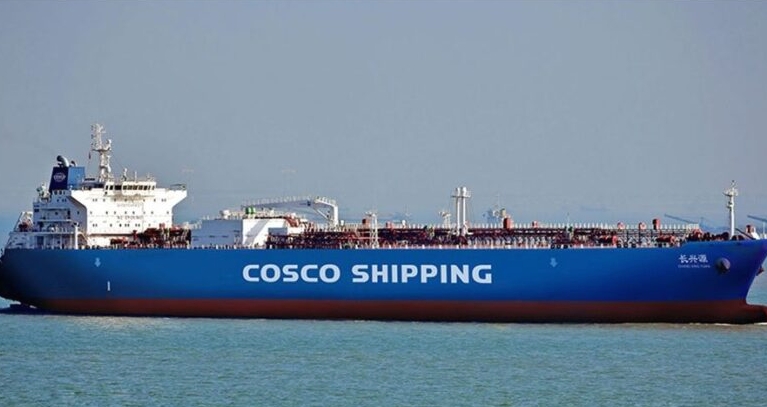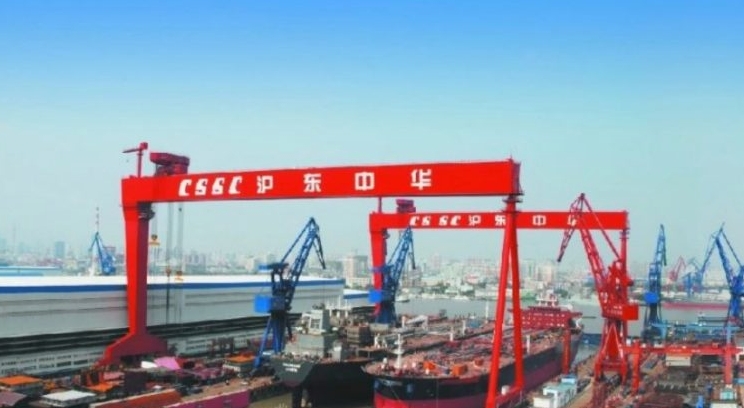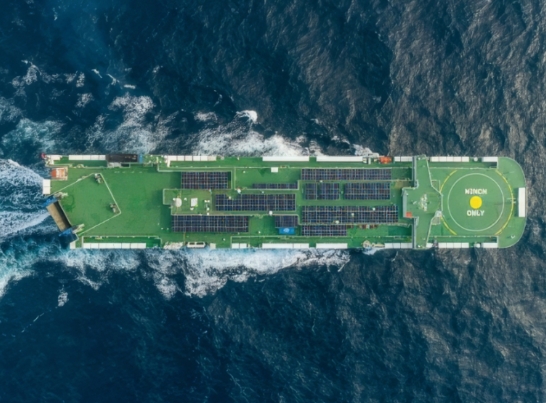
Measuring 199.9 meters in length with a gross tonnage of 68,252 tons and a displacement of 39,069 tons, the vessel was constructed by Guangzhou Shipbuilding International (GSI), under the China State Shipbuilding Corporation (CSSC). It was ordered by Guangzhou Yuanhai Auto Carrier, a subsidiary of COSCO Shipping Specialized Carriers. The ship was officially named and launched in May at the Guangzhou Nansha Auto Terminal.
Yuan Hai Kou has been engineered to carry various vehicle types, such as commercial trucks, construction machinery, buses, and MAFI cargo. COSCO Shipping notes that it is the first vessel to comply with the China Classification Society’s “Safety Technical Guidelines for New Energy Vehicle Roll-on/Roll-off Transport.”
The ship's dual-fuel capability allows it to operate using LNG, which is currently one of the most widely available low-emission fuels. This design is expected to reduce fuel consumption by 20% and cut CO2 emissions by at least 27%, while also lowering levels of nitrogen oxides (NOx), sulfur oxides (SOx), and particulate matter (PM).
In addition to LNG, the vessel is equipped with photovoltaic (PV) systems from Chinese manufacturer LONGi. Over 500 PV panels have been installed across the ship, generating up to 302.8 kilowatts of peak power—the highest solar capacity currently available on ships of this class. COSCO stated: “The distributed PV system uses LONGi’s Sea-Shield series modules,” which are designed to enhance resistance to salt spray and improve waterproof performance through anti-corrosion materials and upgraded sealing processes.
The solar system is expected to generate around 410,000 kWh of electricity annually, saving approximately 111 tons of fuel and reducing CO2 emissions by an estimated 345.9 tons—the equivalent of planting about 38,000 trees each year. It powers onboard systems such as lighting and communication equipment during voyages.
Further sustainability measures include a medium-voltage shore power interface, enabling the vessel to operate with minimal emissions while docked. The combined use of LNG, solar, and shore power is projected to reduce lifecycle carbon intensity by nearly 35% compared to traditional vessels.
COSCO Shipping Specialized Carriers continues to expand its LNG-powered fleet in response to stricter global environmental standards. In September 2024, the company introduced another LNG dual-fuel vessel, the 38-meter-long MV Gan Jiang Kou, which began operations shortly after delivery.