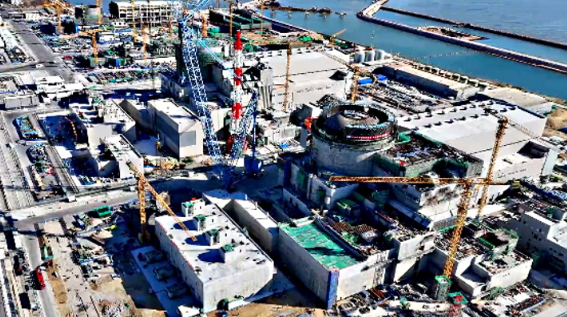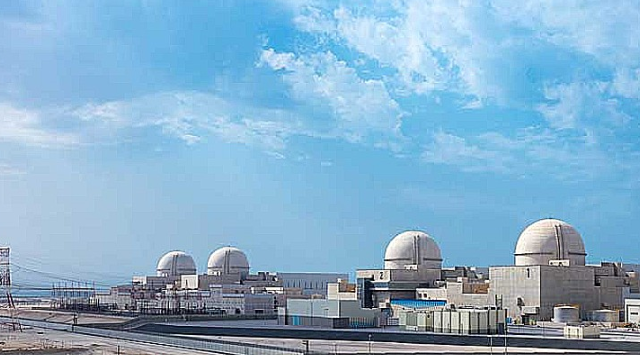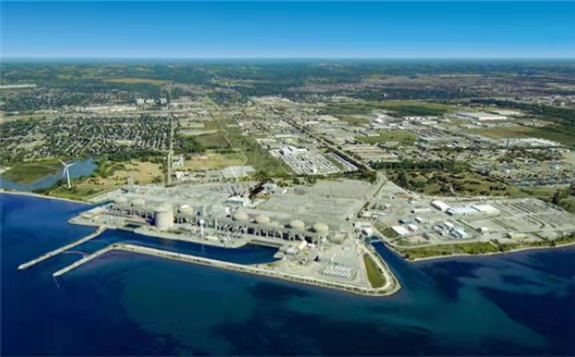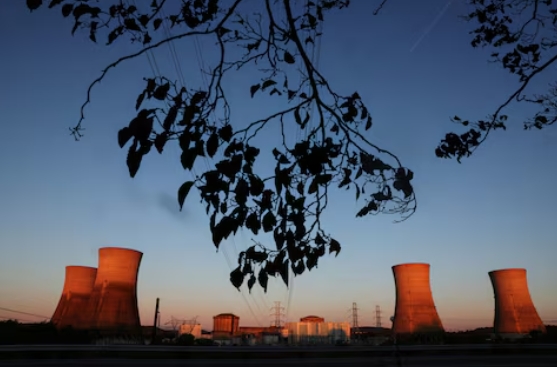
The Three Mile Island Nuclear power plant is seen at sunrise in Middletown, Pennsylvania, U.S., October 16, 2024.
On his first day in office, President Trump declared an energy emergency, citing the growing electricity demand driven by the expansion of artificial intelligence technologies. Chris Wright, the U.S. Energy Secretary, described the current push to develop energy infrastructure and data centers to support AI as “Manhattan Project 2,” referencing the World War II-era project that developed atomic weapons.
According to a draft summary of the orders, Trump will invoke the Defense Production Act, a measure from the Cold War period, to declare a national emergency over reliance on foreign sources for enriched uranium and other key components required for nuclear fuel and advanced reactor technologies. The orders would direct federal agencies to accelerate permitting and site selection for new nuclear installations. Additionally, the Departments of Energy and Defense will be tasked with identifying federal lands and facilities suitable for nuclear deployment and optimizing the processes for building them.
The draft also proposes expanding the use of loan guarantees and direct loans through the Department of Energy to support new reactor construction. During Trump’s first term, the Loan Programs Office (LPO) was used to back a large-scale nuclear project in Georgia. The LPO, now significantly better funded due to legislation from former President Joe Biden’s administration, has experienced staffing reductions under Trump’s second term.
The White House has not commented on the forthcoming executive orders. It is noted that the content of such draft orders is often revised in the final stages of preparation, and there is no certainty that all elements will remain intact upon signing.
The United States, while historically the first developer and currently the largest holder of nuclear power capacity, is now seeing slower growth in the sector compared to China. One source mentioned that representatives from the Nuclear Energy Institute and Constellation, the utility with the highest U.S. reactor capacity, were invited to attend the signing ceremony. Both organizations have not responded to requests for comment.
The executive orders under consideration also propose reforms to the Nuclear Regulatory Commission, the independent body responsible for reactor licensing. The initiative seeks to enhance the Commission's efficiency in processing approvals.
Nuclear energy holds bipartisan appeal in the U.S.—valued by some for its minimal carbon emissions and by others for its reliability relative to intermittent renewable sources like wind and solar. However, nuclear energy continues to pose challenges, notably the issue of long-term radioactive waste disposal, as there is no permanent repository currently available in the U.S.