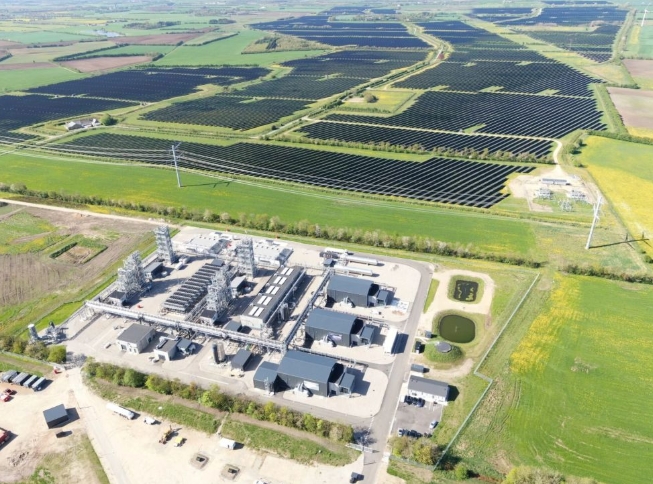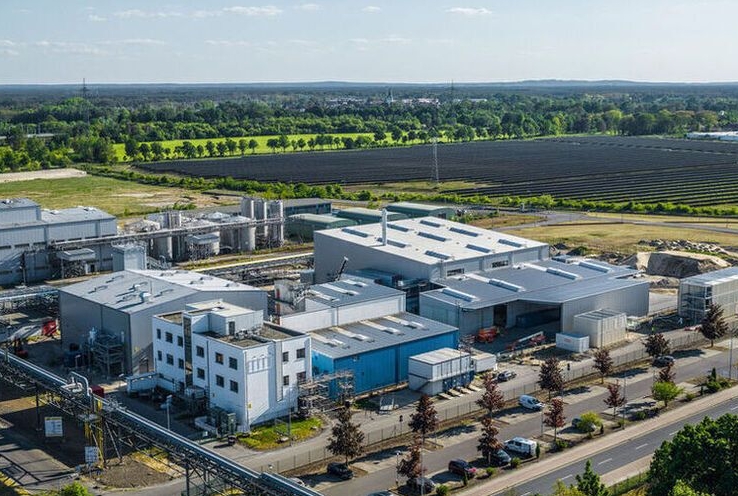
At its production site in Schwarzheide, Germany, BASF operates one of the largest commercial recycling plants for producing black mass from end-of-life batteries and production scrap in Europe.
This plant strengthens the European battery industry by supporting recycling efforts, reducing reliance on primary raw materials, and aligning with circular economy goals. The Black Mass, produced through mechanical battery treatment, contains valuable metals—lithium, nickel, cobalt, and manganese—which can be chemically recovered to create new cathode active materials (CAM). This process promotes resource circularity and lowers the carbon footprint compared to using only primary materials.
Dr. Daniel Schönfelder, President of BASF’s Battery Materials division, stated: “Our new Black Mass plant is another proof for our commitment to the Battery Materials and Recycling industry, which remains to be one of the most significant growth opportunities in the chemical industry and for BASF Battery Materials. It will become a cornerstone of our offerings to our customers to increase raw materials self-sufficiency and comply with the EU Battery Regulation.”
BASF’s operations in Europe span the entire battery recycling value chain, including collection, discharging, dismantling, Black Mass production, and refining. The company collaborates with a robust partner network while operating its own Black Mass facility. In Schwarzheide, BASF also runs Europe’s first fully automated CAM production line, a prototype metal refinery for battery recycling, and one of the continent’s largest Black Mass storage facilities, reinforcing its role as a leading partner in the battery recycling sector.