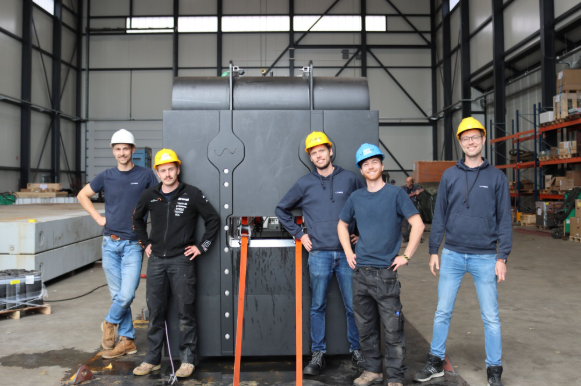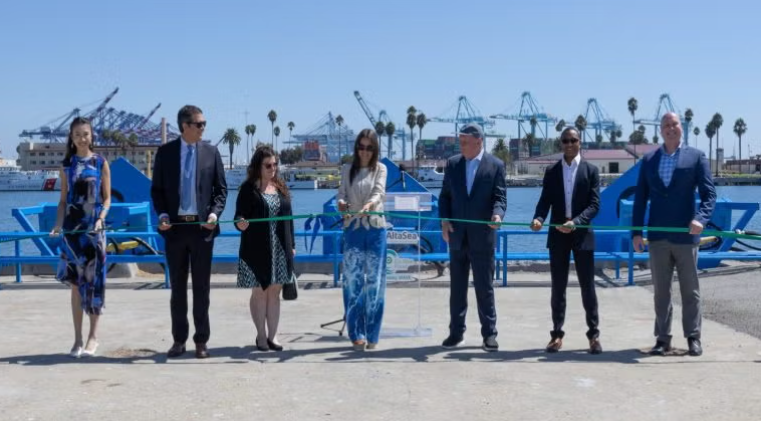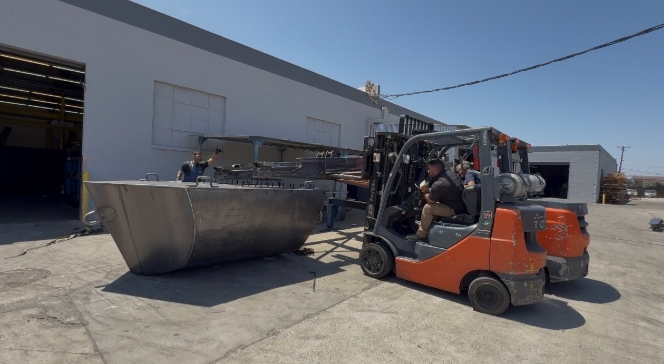
During the visit, Eco Wave Power CEO Inna Braverman and Vice President of Engineering Ran Atias reported that three floaters for the project have been constructed and are now moving into the painting and final assembly phase. The floaters are expected to be completed by the end of June, keeping the project on schedule.
Braverman stated: “Seeing the floaters take shape here in California is incredibly exciting. This is not just a milestone for our technology—it’s a powerful statement about what happens when international innovation meets strong local partnerships. The floaters taking shape here in California are not just steel and bolts—they’re the physical proof that wave energy is moving from concept to reality on American shores.”
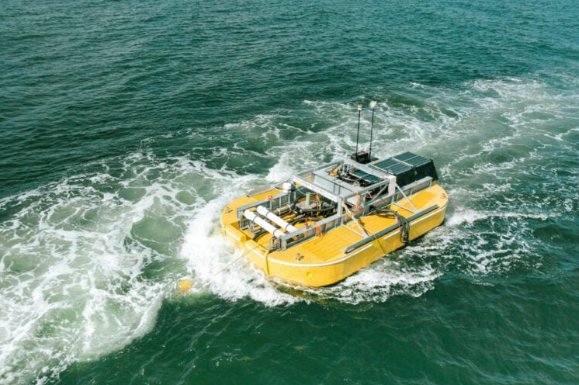
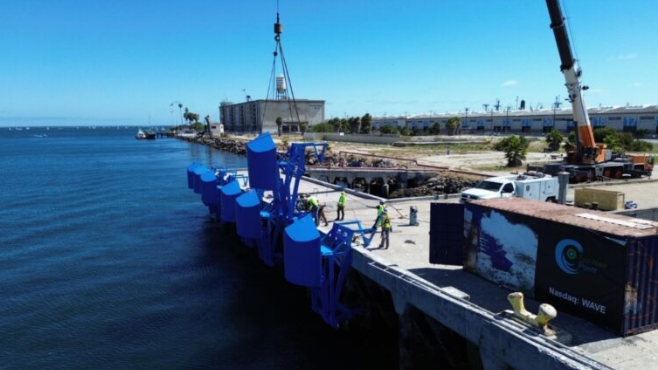
Alongside manufacturing, Eco Wave Power and the Port of Los Angeles have finalized the deployment strategy. The installation will use the company’s patented floaters, which are mounted on existing marine structures. Wave motion is harnessed to generate electricity via a land-based conversion unit. This approach is designed to reduce maintenance demands compared to traditional offshore systems.
Hosted by AltaSea at the Port of Los Angeles and supported by Shell’s Marine Renewable Program, this initiative will be the first onshore wave energy installation in the U.S. The project aims to demonstrate the commercial potential of scalable, port-integrated wave energy in the American renewable energy market.
In April 2025, Eco Wave Power signed a manufacturing agreement with All-Ways Metal for the production of the floaters. This followed several key regulatory approvals, including a federal permit issued by the U.S. Army Corps of Engineers in November 2024 and a final license granted by the Port of Los Angeles in early 2025.
With these elements in place, Eco Wave Power continues to advance its efforts to bring wave energy technology into practical use. The pilot is positioned as a significant step toward diversifying renewable energy sources in the U.S., aligning with broader goals to enhance sustainable energy generation and infrastructure development.
The project also reflects the potential for collaboration between global innovators and local manufacturing and infrastructure partners to support the transition toward cleaner energy solutions.