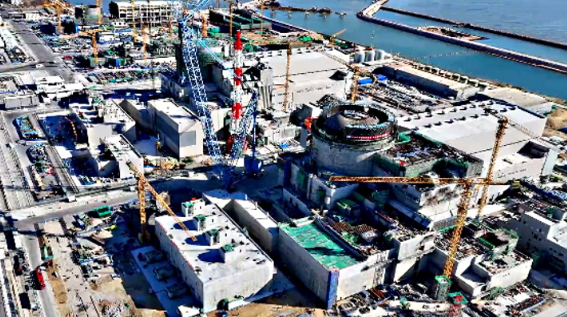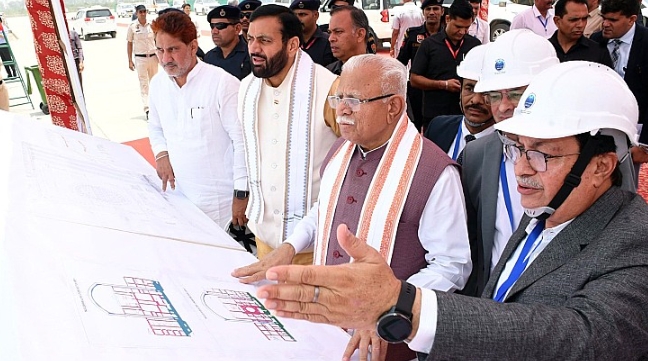
The minister reviewed progress at the Gorakhpur site
The Atomic Energy Regulatory Board (AERB) granted a siting license in 2015 and approved excavation for the first two units in 2018, following an earlier groundbreaking ceremony. The AERB gave consent for the first concrete pour in 2020, initially planned for 2019. On July 14, 2025, Minister Khattar visited the site to assess progress, confirming that unit 1’s first concrete pour is scheduled for October 2025. Unit 1 is expected to reach first criticality by June 2030 and begin commercial operation by March 2031, with unit 2 following approximately six months later.
Manohar Lal Khattar stated: “The first pour of concrete for unit 1 is targeted by October 2025.” The project is managed by NPCIL under the Department of Atomic Energy, contributing to India’s energy capacity expansion. The Gorakhpur project’s first two units are classified as under construction by the Indian government, though the International Atomic Energy Agency’s PRIS database will recognize this status only after the first major concrete pour for the reactor base.
The second phase, comprising units 3 and 4, is part of a broader plan approved by the Indian government to build ten nuclear units under a fleet approach. This includes additional projects in Rajasthan (Mahi Banswara units 1-4), Karnataka (Kaiga units 5 and 6), and Madhya Pradesh (Chutka units 1 and 2). India currently operates 24 nuclear reactors with a total capacity of 8.88 GW and has six units under construction, totaling 4,768 MWe. The country aims to expand its nuclear energy capacity to 100 GW by 2047.
The Gorakhpur project supports India’s goal of enhancing energy reliability through domestically designed nuclear technology, contributing to sustainable energy development in the region.