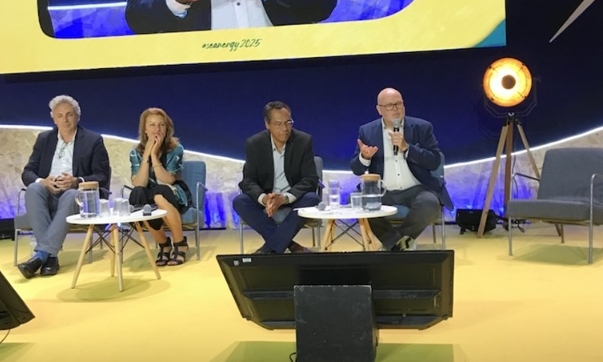
Gourlet stated: “To be able to respond to what France wants to build in floating, the ports will need €1.2bn.” She added: “We need some more help. It is good [the €190m] funding but is not enough. If not, we risk losing the game.” She highlighted that La Rochelle is collaborating with ports like Bordeaux and Bayonne to develop integrated solutions to prepare for the anticipated growth in floating wind projects.
Jean-Rémy Villageois, chair of the management board at Nantes-Saint-Nazaire Port, also urged the government for clearer long-term support during a discussion on optimizing ports for offshore renewables. He said: “We need more visibility from the government to keep people working in the quays and the factories in our ports.” Villageois further noted: “At the moment it is a case of should I keep the workers on if the work is not there or should I let them go elsewhere. If I do, how do I get them back when I really need them on a project. We need the investment architecture. It can’t be all stop and go.” He proposed a 25-year government roadmap to ensure consistent funding, emphasizing that France relies on a blend of public and private investment, unlike the UK’s privately owned ports.
John MacAskill, managing director of renewables at ABL Group, underscored the value of government-backed investment, citing the Scottish National Investment Bank’s contributions to ports like Haventus-owned Ardersier Port near Inverness. He stated: “It gives a level of comfort to investors and has helped Scottish ports to break ground.” This example illustrates how strategic funding can drive port development for renewable energy.
These appeals highlight the need for enhanced investment to strengthen France’s port infrastructure, enabling the country to advance its floating offshore wind sector and meet its renewable energy objectives.