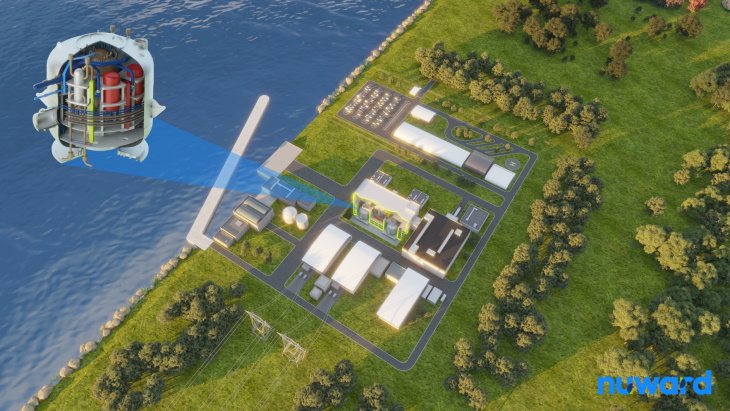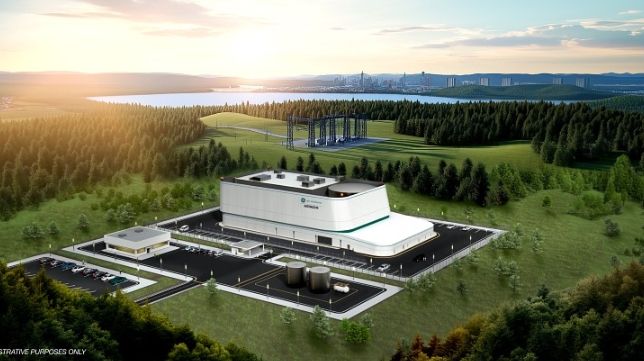
An illustration of a BWRX-300 plant
TVA President and CEO Don Moul stated: “This is an exciting step to bringing the nation’s first utility-led SMR online. As the first utility in the United States to have a construction permit application under review by the Nuclear Regulatory Commission for the BWRX-300 reactor, this will create a path for other utilities to deploy the reactor - ensuring energy security and reliable electricity for all.”
Located near Oak Ridge, Tennessee, the Clinch River site already holds an early site permit for SMRs, confirming its suitability for nuclear power plant construction based on safety, environmental impact, and emergency planning assessments. TVA has also submitted an Environmental Report to the NRC. Preliminary site preparation could begin as early as 2026, pending the NRC’s review.
The BWRX-300, a 300 MWe water-cooled, natural circulation SMR with passive safety systems, builds on the design of GE Vernova Hitachi’s ESBWR boiling water reactor. Its compact, modular design allows for faster construction, simpler operation, and better integration into the landscape compared to traditional nuclear reactors, according to TVA.
TVA is collaborating with Ontario Power Generation, Synthos Green Energy, and GE Vernova Hitachi Nuclear Energy on the BWRX-300’s standard design. Additionally, TVA leads a coalition of utilities and supply chain partners that has applied for a $800 million grant from the US Department of Energy to support the construction of the nation’s first SMR, alongside an $8 million grant to offset licensing review costs.
The project aligns with broader efforts to advance clean energy solutions. For example, in May, Ontario, Canada, approved construction of the first of four BWRX-300 units at the Darlington New Nuclear Project site. The Clinch River initiative positions TVA as a leader in deploying innovative nuclear technology, contributing to reliable and sustainable energy production in the United States.
By pursuing the BWRX-300, TVA aims to enhance energy security while leveraging the advantages of SMRs, including their smaller footprint and enhanced safety features. The ongoing NRC review and planned site work mark significant steps toward integrating advanced nuclear technology into the US energy landscape.