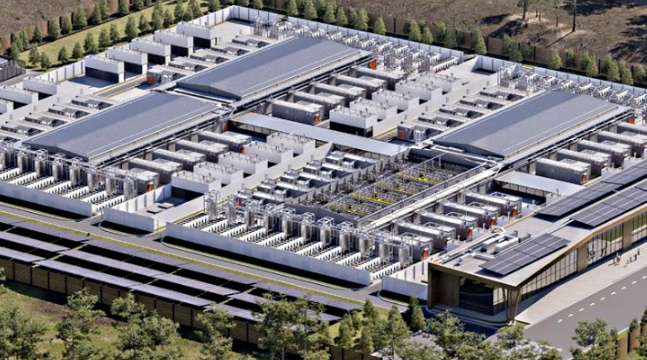
The collaboration focuses on integrating modular, energy-efficient power and cooling systems designed specifically for data centres powered by Oklo’s nuclear technology. By using heat from Oklo’s onsite power plants to operate Vertiv’s cooling systems, the partnership aims to optimize energy efficiency and improve data centre performance.
Oklo’s Aurora powerhouse, a fast neutron reactor, employs heat pipes to transfer heat from the reactor core to a supercritical carbon dioxide system, generating approximately 15 MWe of electricity and usable heat. The reactor can operate using high-assay low-enriched uranium (HALEU) or recycled nuclear fuel, supporting sustainable energy production.
The two companies will develop comprehensive reference designs for data centres powered by Oklo’s onsite nuclear plants. The first technology demonstration is planned for Oklo’s initial commercial Aurora power plant, to be constructed at the Idaho National Laboratory, with commercial operations expected between late 2027 and early 2028.
“This agreement is about delivering clean power, energy-efficient cooling, and infrastructure solutions purpose-built for AI factories, data centres, and high density compute,” said Jacob DeWitte, co-founder and CEO of Oklo. “We are developing a plant concept that leverages proven, off-the-shelf components without altering the core design of our plants. Vertiv is an expert in cooling and power innovation for data centres and critical infrastructure, so co-designing these solutions from the outset, we can create greater value and efficiency for data centre and infrastructure operators.”
Vertiv CEO Gio Albertazzi stated: “Our collaboration with Oklo is an extension of Vertiv’s commitment to energy-efficient infrastructure that supports modern data centre demands. As the demand for AI and high-performance computing continues to grow, nuclear energy is increasingly a discussion point for hyperscale, colocation, and other large data centres. Vertiv is committed to driving innovation with the higher cooling capacities and energy efficiencies required to support modern data centres.”
This partnership aims to streamline data centre deployment by co-designing energy and cooling systems, enhancing performance and supporting the growing needs of advanced computing infrastructure.