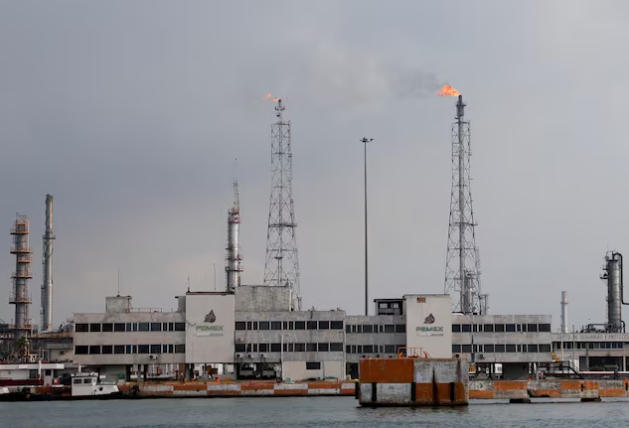
A general view of the Mexico state oil firm Pemex's Ciudad Madero refinery, in Ciudad Madero, Mexico May 28, 2025.
Pemex's international trading arm, PMI, had anticipated lower exports this year, as more crude oil is being directed to domestic refineries, including the newly operational Olmeca refinery in Dos Bocas. The company’s quarterly earnings report highlighted a 38% decrease in imports of refined products, such as gasoline and diesel, with imports totaling 475,047 bpd in June, reflecting higher local refining output.
The Olmeca refinery contributed significantly, processing 191,585 bpd, helping Pemex’s seven domestic refineries achieve a total processing volume of 1.12 million bpd. Despite these advancements, Pemex faces financial challenges, with outstanding debts of approximately $120 billion to investors and suppliers, alongside a persistent decline in crude oil and condensate production, which currently stands at around 1.6 million bpd.
Pemex executives remain focused on increasing production to meet a target of 1.8 million bpd. They stated: “The company is working towards achieving its production goal of 1.8 million bpd.” To support this objective, the Mexican government is pursuing a strategy to enhance domestic refining capacity, reducing reliance on imported fuels and prioritizing local processing of crude oil.
While production has not yet reached the desired level, Pemex and government officials are exploring partnerships with private companies to boost output, though specific details of these collaborations have not been disclosed. The focus on domestic refining reflects Mexico’s broader aim to strengthen its energy sector through increased self-sufficiency.