


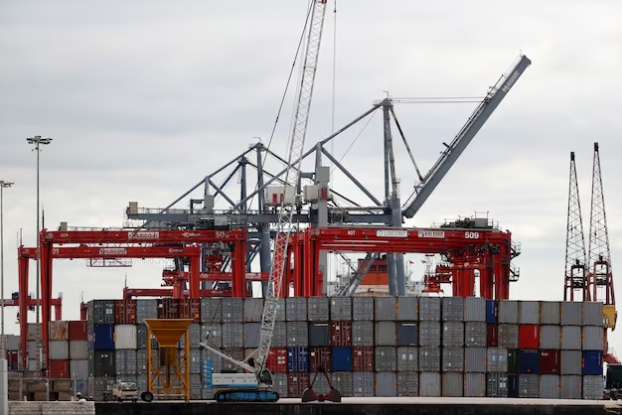
Containers are seen at Lisbon's port, Portugal, June 26, 2018.
Infrastructure Minister Miguel Pinto Luz detailed that the plan covers six ports, including Sines, Europe’s closest deep-water port to the U.S. coast. Sines will undergo expansion of its current terminal and construction of a new one to meet rising trade demands.
Pinto Luz stated: “Port activity in Portugal has potential to attract new investment given the country’s privileged location.” Portugal’s Atlantic coastline positions it as a key gateway to the Iberian market and a connector to trans-European transport networks.
The plan introduces 15 new exploration concessions for private operators, with a new law extending concession terms to 75 years from the previous 30 years. This change aims to encourage sustained private investment in port infrastructure.
By 2035, the government expects cargo handling to reach 125 million tons annually, a 50% increase from 2023, and container throughput to rise by 70% to 6.5 million Twenty-Foot Equivalent Units (TEUs), enhancing Portugal’s global trade capacity.
