


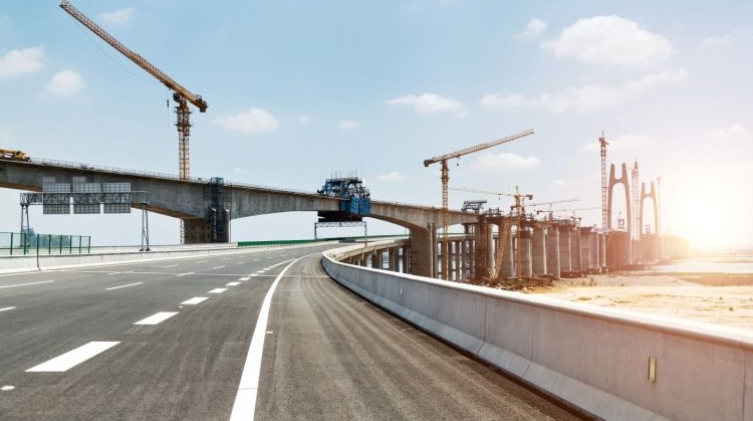
The project is forecast to take 38 months to complete.
The Soodevahe junction is designed to link the Rail Baltica mainline with the Port of Muuga, strengthening Estonia’s trade connections with the eastern Baltic Sea region and Western Europe. The project, spanning 38 months, involves complex engineering tasks to ensure seamless infrastructure development.
Key components include constructing a 286-meter-long Lagedi Road highway viaduct and developing the Rail Baltica mainline embankment. The project also encompasses drainage systems, culverts, land improvements, and landscaping. Additionally, it involves partial construction of a 330-meter Soodevahe railway tunnel and a 1,300-meter approach ramp.
Jaanus Taro, Chair of AS TREF Nord’s management board, highlighted the project’s challenges: “In this three-level junction, we must cross two railway corridors of different gauges, build a tunnel underneath them, and at the same time maintain uninterrupted traffic. All of this takes place in a geologically complex area with a high groundwater level – technically, this is an extremely demanding site.”
Anvar Salomets, Rail Baltic Estonia’s management board chair, emphasized the junction’s significance: “Although this is a short section, it is of strategic importance. Soodevahe will host the connection between the Rail Baltica mainline and the Muuga route, enabling the direct flow of international freight from the port to the heart of Europe.”
Funding for the project is provided by the European Union’s CEF 10 programme and proceeds from carbon dioxide quota sales, as agreed between Rail Baltic Estonia and Estonia’s Ministry of Climate. This initiative supports Estonia’s efforts to enhance its transportation infrastructure, fostering efficient and sustainable trade routes across the region.
The Soodevahe junction project underscores AS TREF Nord’s expertise in delivering complex infrastructure solutions and reinforces Estonia’s role as a key hub for regional connectivity.
