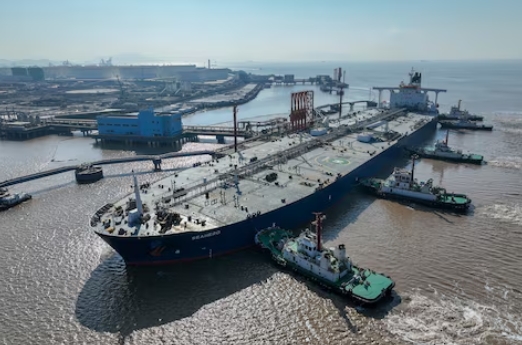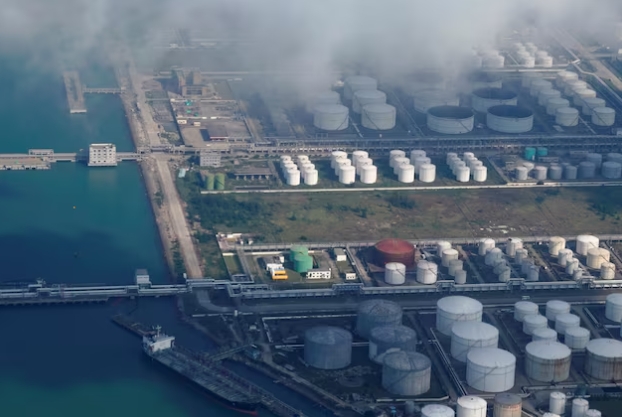
Oil and gas tanks are seen at an oil warehouse at a port in Zhuhai, China October 22, 2018.
Muyu Xu, senior crude oil analyst at Kpler, explained: “Independent refiners bought heavily in June, building up inventories, so their immediate demand in July was lower.” This shift in purchasing patterns contributed to the month-on-month decline in crude oil imports.
From January to July 2025, China, the world’s largest crude oil importer, recorded total imports of 326.57 million tons, equivalent to 11.25 million barrels per day, a 2.8% increase compared to the same period in 2024, the customs data showed. The rise underscores steady demand supported by robust refining activity.
Refinery utilization rates in China climbed to 71.84% in July, up 1.02 percentage points from June and 3.56 percentage points higher than a year ago, according to consultancy Oilchem. State-owned refineries boosted their processing rates, while independent refiners scaled back. Maintenance activities reduced overall refining throughput by 79 million tons in July, but three refineries, with a combined capacity of 28.7 million tons, completed maintenance and resumed operations, Oilchem reported.
In addition, China’s refined fuel exports in July grew by 7.25% year-on-year, reaching 5.34 million tons, according to the customs data. This increase highlights the country’s active role in the global fuel market.
Natural gas imports, including both piped gas and liquefied natural gas, totaled 10.63 million tons in July, down 2.1% from the previous year. The decline reflects adjustments in import strategies amid stable domestic energy dynamics.
China’s energy sector continues to balance import levels with domestic refining capacity and global market demands, maintaining its position as a key player in the global oil and gas trade.