The LNG bunkering vessel will have an overall length of 138 meters, a molded beam of 24.8 meters, and a structural draft of 7.2 meters. It is designed not only to refuel ships with LNG but also to accommodate future ammonia fuel bunkering operations. The vessel will be equipped with two full-rotation (azimuth) thrusters, enhancing its maneuverability to meet LNG bunkering requirements at ports around the world.
The vessel will be classed by the China Classification Society (CCS) and will feature methane slip control and integrated carbon capture technology. These features are expected to greatly improve the vessel’s environmental performance, ensuring compliance with the International Maritime Organization (IMO) regulations.
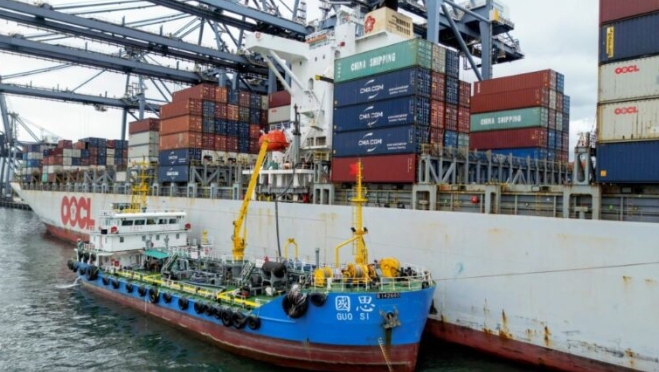
China has been rapidly developing its LNG bunkering infrastructure, with the goal of becoming a world leader in this sector. Ports such as Shanghai and Shenzhen have already made significant strides in LNG bunkering, and Yangshan Port, located south of Shanghai, saw China’s first ship-to-ship LNG simultaneous operation (SIMOPS) in March 2022. During this operation, the CMA CGM SYMI, a 15,000 TEU container vessel, received LNG from a bunker barge deployed by the Shanghai International Port Group (SIPG).
The global demand for LNG bunkering services has been rising due to stricter environmental regulations, with more LNG-ready ships entering service. In 2023, 185 ports around the world offered LNG bunkering services, a number that has increased to 201 today. Furthermore, 57 more ports are expected to upgrade their facilities to provide LNG bunkering services by the end of 2024.
This initiative by DSOC and Zhongnen Fuel Injection Technology underscores China’s commitment to expanding its LNG bunkering infrastructure, positioning the country as a key player in the global LNG market.