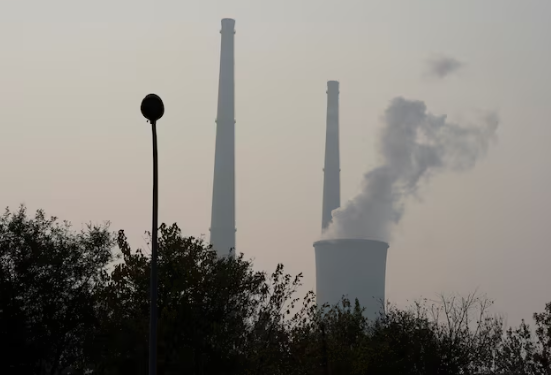
A cooling tower and chimneys are seen at a thermal power plant in Beijing, China, November 3, 2018.
Thermal power, primarily coal with some natural gas, rose 4.3% from July 2024 to 602 billion kilowatt-hours (kWh). The spike was fueled by extreme summer temperatures increasing demand for cooling, leading grid operators to rely on coal and gas for stable power supply.
Summer and winter typically see higher electricity use due to cooling and heating needs. The 2024-2025 winter, however, was unusually warm, reducing coal power demand. In July, hydropower, China’s second-largest power source, fell 9.8% year-on-year due to drought-related low dam inflows, further boosting thermal power use.
Overall, fossil-fuelled power output has declined by 1.3% in the first seven months of 2025 compared to 2024, as wind and solar energy sources grow. Total power generation in July reached 926.7 billion kWh, up 3.1% from last year. The statistics, covering firms with at least 20 million yuan ($2.8 million) in annual revenue, may understate renewable output. The National Energy Administration will release fuller data later this month.