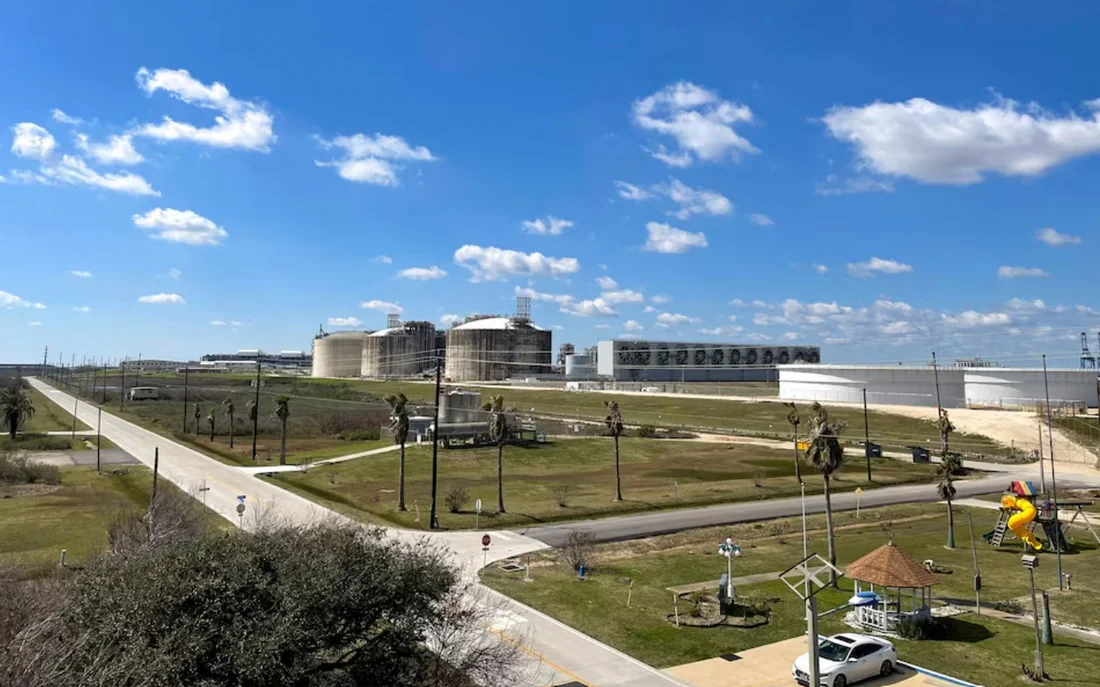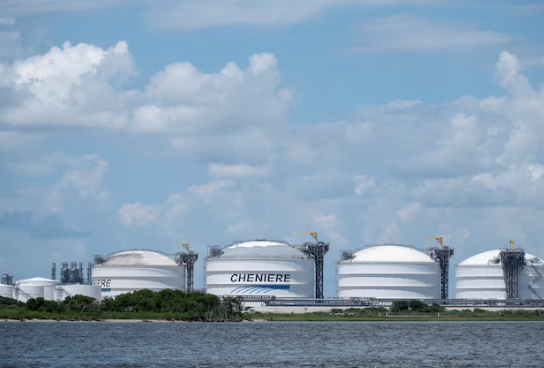
A view of Cheniere's Sabine Pass LNG facility located in Cameron Parish, Louisiana, as seen from Port Arthur, Texas, U.S., June 23, 2025.
Cheniere Energy’s Sabine Pass facility in Texas, which typically processes up to 4.5 billion cubic feet per day (bcfd) of natural gas, operated at 3.7 bcfd. Similarly, Sempra’s Cameron LNG plant in Louisiana, with a capacity of 2 bcfd, was down to 1.3 bcfd, as reported by LSEG. These facilities are among the largest in the U.S., with Sabine Pass ranking first and Cameron fourth, contributing significantly to the country’s position as the world’s leading LNG exporter since 2023.
Cheniere Energy chose not to provide a statement, and Sempra did not immediately respond to inquiries regarding the reduced demand. The combined decline at these plants led to a total U.S. LNG demand of 14.7 bcfd on Monday, marking the lowest level in two months, according to LSEG data.
The reduced activity coincided with a slight dip in U.S. natural gas futures. On Monday morning, front-month gas futures for September delivery on the New York Mercantile Exchange decreased by 2 cents to $2.90 per million British thermal units, reflecting a roughly 1% drop.
These developments highlight the dynamic nature of the LNG industry, where operational changes can influence market trends. The U.S. continues to play a pivotal role in global LNG exports, supported by the substantial capacities of facilities like Sabine Pass and Cameron LNG, despite temporary fluctuations in demand.